“David found active mud tubes along four of the pier blocks in our crawlspace. He explained what subterranean termites are doing and why the pier-and-beam foundation creates direct soil access. He treated the perimeter and installed Sentricon stations, then checked back at 30 days. No new activity. The monitoring program gives us ongoing peace of mind.”
Subterranean Termite Treatment — Rice Village
Subterranean Termite Treatment in Rice Village, TX
Harris County clay soil and drainage from Braeswood bayou trail keep subterranean termite colonies active year-round in Rice Village. Pier-and-beam homes built in the 1920s-1950s are especially vulnerable — soil contact under the crawlspace gives colonies a direct path to original wood framing. Resolve delivers targeted soil treatment and bait station programs that stop foraging before damage accumulates.
- Full-perimeter liquid termiticide barriers for pier-and-beam and slab foundations
- Sentricon Always Active bait stations for colony elimination and ongoing monitoring
- Crawlspace and subfloor treatment addressing direct soil-to-wood contact points
Why Rice Village Homeowners Choose Resolve for Subterranean Termite Treatment
Subterranean termite pressure in Rice Village is persistent — Harris County clay soil holds moisture year-round and supports colony activity in every season. The right treatment creates a barrier that intercepts foraging before it reaches the structure.
- Soil treatment applied via trenching and rodding to reach colony foraging zones under pier-and-beam crawlspaces and slab edges
- Sentricon Always Active bait stations eliminate entire colonies rather than just blocking foragers from the surface
- Crawlspace pier block and subfloor inspection identifies existing damage and direct soil-to-wood contact points before treatment
- Harris County clay soil expertise — David understands how seasonal moisture cycles drive termite foraging patterns in this specific region
- Written treatment documentation for real estate transactions, lender requirements, and annual monitoring records
- Annual monitoring program available without long-term contract — year-to-year Sentricon station checks keep protection current
What Rice Village Homeowners Say About Resolve's Subterranean Termite Treatment
Liquid Perimeter Barriers Sentricon Monitoring Crawlspace Expertise
“We were in the process of buying a Rice Village home and the WDO inspection found subterranean termite evidence. David treated the foundation before closing and provided the documentation our lender needed. He also explained what annual monitoring involves so we could budget for it. Very clear communicator.”
“I had Sentricon stations installed after David recommended them for our older home near the bayou. The monitoring schedule is easy — David comes out annually, checks the stations, and gives me a written update. It's the right level of protection for our lot without any ongoing service contract obligation.”
Subterranean Termite Treatment Services for Rice Village Homes
Targeted soil treatment and monitoring programs designed for the specific construction types and termite pressure found throughout Rice Village's older housing stock.
Crawlspace and Pier Block Inspection
Subterranean termite treatment begins with a thorough crawlspace inspection — mud tube location, live termite evidence, moisture conditions, and direct soil-to-wood contact points are documented before treatment begins. This inspection drives a treatment plan specific to your home's crawlspace configuration.
Liquid Termiticide Perimeter Treatment
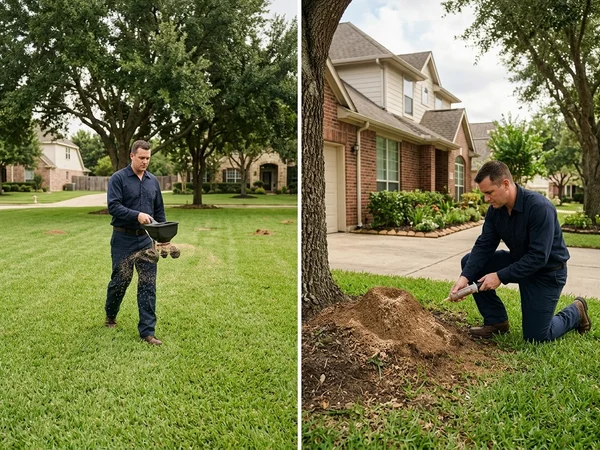
Trenching around the exterior foundation perimeter and rodding through accessible interior crawlspace areas delivers liquid termiticide to the foraging zones where subterranean colonies travel. A continuous chemical zone prevents workers from reaching the structure and disrupts colony activity over time.
Sentricon Always Active Bait Station Installation
Bait stations installed at regular intervals in the soil around the foundation perimeter attract subterranean termite workers, who carry active bait back to the colony. Colony elimination occurs over weeks to months as the product spreads through the population. Stations are monitored annually for ongoing detection.
Subfloor and Wood Treatment
Where floor joists or subfloor sheathing show evidence of existing damage or direct contact with soil, David applies appropriate wood treatment products to the affected sections. This supplements soil treatment and addresses harborage conditions already established within the crawlspace.
Moisture and Drainage Assessment
Subterranean termite activity is closely linked to moisture — wet soil near the foundation drives foraging. David assesses drainage conditions around the home, notes standing water risks from Braeswood bayou proximity or dense planting, and recommends mitigation steps that reduce long-term termite pressure.
Annual Sentricon Monitoring
Annual monitoring visits check all bait stations for termite activity, replace consumed bait as needed, and assess perimeter conditions for new entry risk. Monitoring is available year-to-year without a long-term contract. David documents each visit and communicates findings directly to you.
How Subterranean Termite Treatment Works in Rice Village
A systematic approach from crawlspace inspection through soil treatment and ongoing annual monitoring — calibrated to the moisture and soil conditions specific to Rice Village.
- 1
David accesses the crawlspace and inspects all pier blocks, floor joists, and subfloor areas for mud tubes, live termites, and damage. Moisture and drainage conditions are noted. External foundation perimeter is checked for above-grade mud tube construction. Findings are documented before treatment is proposed.
- 2
Liquid termiticide is applied to the exterior foundation perimeter via trenching and rodding, creating a continuous treated soil zone. Interior crawlspace areas are treated through available access points. Sentricon bait stations are installed at regular intervals around the foundation if selected as part of the treatment plan.
- 3
Written documentation is provided the same day — covering treatment scope, products applied, areas treated, and any pre-existing damage noted. All documentation is formatted for real estate transaction use, lender requirements, and future WDO inspection reference.
- 4
A follow-up inspection 30 days after treatment confirms no new mud tube construction and assesses treatment effectiveness. Annual Sentricon monitoring visits thereafter check all stations and document findings. You are notified of any activity found and treatment is adjusted if needed.
Resolve Subterranean Treatment vs. National Companies in Rice Village
| Feature | Resolve Pest and Termite | National Pest Companies |
|---|---|---|
| Crawlspace personally inspected by the treating technician | ✓ | ✗ |
| Treatment plan specific to crawlspace configuration and moisture conditions | ✓ | Standard package applied |
| Sentricon Always Active bait stations | ✓ | ✓ |
| Annual monitoring without multi-year contract | ✓ | ✗ |
| Moisture and drainage assessment included | ✓ | ✗ |
| Written documentation for lender and real estate use | ✓ | ✓ |
| 30-day re-inspection included in treatment | ✓ | Often additional fee |
Case Study
Stopping Active Subterranean Termite Foraging Before Floor Joist Damage Worsened
The Problem
A Rice Village homeowner called Resolve after noticing soft spots in a hardwood floor in the rear of their 1945 pier-and-beam bungalow. David's inspection found subterranean termite mud tubes along six pier blocks in the crawlspace and active termite workers in two floor joist sections directly above the most active mud tubes. The infestation had been progressing unnoticed for an estimated two to three years based on the extent of gallery development in the joists.
Our Solution
David applied liquid termiticide via trenching around the full foundation perimeter and through interior crawlspace rod injection at the affected pier locations. The two compromised floor joist sections were treated with wood preservative and marked for contractor evaluation. Sentricon bait stations were installed at eight points around the perimeter to provide ongoing colony monitoring. Treatment was completed in a single four-hour visit.
The Outcome
The 30-day re-inspection found no new mud tube construction and no live termite activity in the previously active sections. The homeowner engaged a contractor to assess the two damaged floor joists — both were found to retain structural integrity and did not require full replacement. Annual Sentricon monitoring was enrolled to prevent recurrence. The soft floor spots were addressed by the flooring contractor as a separate scope.
Subterranean Termite Treatment FAQs for Rice Village Homeowners
Why is Rice Village at higher subterranean termite risk than newer Houston suburbs?
Rice Village's older pier-and-beam construction creates direct soil-to-wood contact under crawlspaces — the primary access route for subterranean termites. Harris County clay soil retains moisture year-round, and proximity to Braeswood bayou drainage keeps foraging conditions favorable. Newer slab construction reduces but does not eliminate this risk.
What does a subterranean termite mud tube look like?
Mud tubes are narrow, pencil-width tunnels of soil and termite secretion that run from the ground surface to above-grade wood. In crawlspaces, they typically run up the sides of pier blocks or masonry foundation walls toward floor joists. They are often the first visible sign of active subterranean termite activity.
Is liquid treatment or Sentricon bait stations better for Rice Village homes?
Both are effective, and many Rice Village homes benefit from a combined approach. Liquid barriers create an immediate treated zone that stops active foraging. Sentricon bait stations eliminate the entire colony over time and provide ongoing monitoring with minimal chemical footprint. David recommends the appropriate method or combination based on your specific infestation and lot configuration.
How long does subterranean termite treatment take in a Rice Village home?
A full-perimeter liquid barrier treatment with crawlspace treatment typically takes two to four hours depending on home size and access conditions. Sentricon station installation adds about 30 to 60 minutes. Combined treatment for a standard Rice Village bungalow can typically be completed in a single half-day visit.
Do I need to vacate my home during subterranean termite treatment?
No. Liquid perimeter treatment is applied to exterior soil and the crawlspace — household occupants do not need to leave. Crawlspace access is needed, and David will advise if any specific interior areas require temporary access. Normal household activity can continue during treatment.
How does annual Sentricon monitoring work after initial treatment?
David visits annually to check each bait station for termite activity, consumption of active bait, and station condition. He documents the results and reports findings directly to you. If activity is detected at a station, treatment is adjusted accordingly. Annual monitoring is available year-to-year without a multi-year contract.
Related Termite Services in Rice Village
Rice Village Pest Control Hub
Termite Control in Rice Village
Termite Inspection in Rice Village
Termite Treatment in Rice Village
Drywood Termite Treatment in Rice Village
Termite Fumigation in Rice Village
Subterranean Termite Treatment Service
West University Place Subterranean Termite Treatment
Tanglewood Pest Control