“We have a 1937 bungalow with original heart pine rafters in the attic. David found drywood termite galleries in two rafter sections and assessed carefully whether the infestation was contained. It was, and spot treatment resolved it. The original framing is intact and there has been no recurrence in 18 months. We appreciated him not jumping straight to fumigation.”
Drywood Termite Treatment — Rice Village
Drywood Termite Treatment in Rice Village, TX
Rice Village's 1920s-1950s homes contain old-growth wood in attic rafters, ridge boards, and original hardwood floors that drywood termites find ideal. Spot treatment can protect and preserve these original materials when infestations are caught in accessible sections — without the disruption of whole-structure fumigation.
- Localized spot treatment for accessible drywood termite infestations in attic and wall framing
- Old-growth wood preservation — original framing protected without unnecessary fumigation
- Honest scope assessment — fumigation recommended only when the infestation genuinely warrants it
Why Rice Village Homeowners Choose Resolve for Drywood Termite Treatment
Drywood termite treatment in older homes is as much about what you preserve as what you eliminate — the original framing in Rice Village's historic bungalows is worth protecting carefully.
- Spot treatment applied directly to infested framing sections — preserving original old-growth wood that is often irreplaceable in 1920s-1950s construction
- Honest infestation scope assessment — David tells you when spot treatment is sufficient and when fumigation is actually warranted
- Attic rafter, ridge board, and wall framing inspection with direct access to infestation sites before any treatment decision
- Frass and gallery mapping during inspection gives you a clear picture of infestation extent before committing to treatment
- Post-treatment follow-up at 30 days confirms effectiveness and checks for any extension of activity beyond treated sections
- Written treatment documentation for real estate disclosures and future WDO inspection records
What Rice Village Homeowners Say About Resolve's Drywood Termite Treatment
Old-Growth Wood Preservation Honest Scope Assessment Spot Treatment Expertise
“Noticed frass on the floor in a rear bedroom and called David. He identified drywood termites in the wall framing above the window and a second spot in the closet wall. Both were treated with spot injection. He explained what he found and why spot treatment was the right approach for this scope. Clean follow-up at 30 days.”
“David inspected our 1950s home before we listed it and found early drywood activity in one attic rafter section. Spot treatment addressed it without fumigation, which saved us three days out of the house and significant cost. He issued documentation the same day and the buyers' inspector confirmed no active termites at closing.”
Drywood Termite Treatment Services for Rice Village Homes
Targeted inspection, spot treatment, and post-treatment monitoring calibrated to the older construction materials and framing configurations common in Rice Village's historic homes.
Drywood Termite Inspection and Frass Mapping
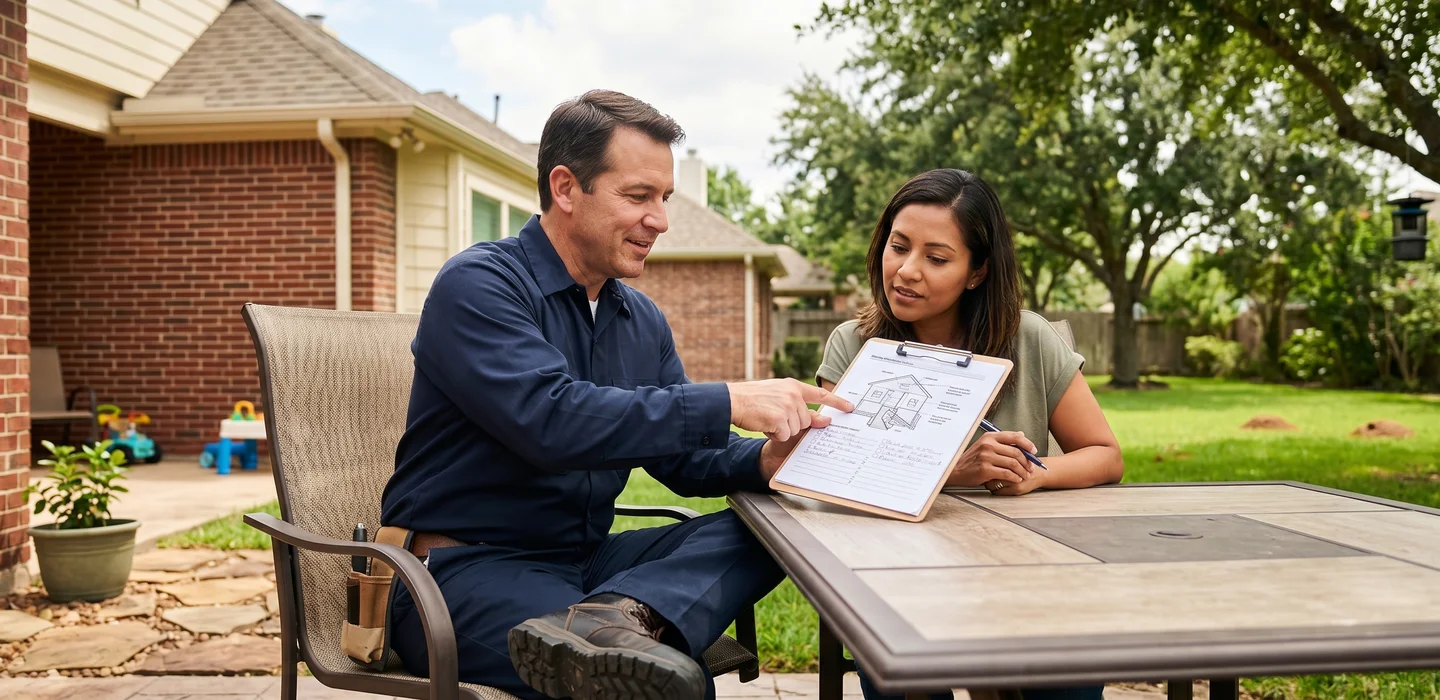
David inspects attic rafters, ridge boards, wall framing, windowsills, door frames, and hardwood floor edges for drywood termite frass deposits, gallery holes, and wing drop evidence. Infested sections are identified and mapped before any treatment decision is made — giving you a clear picture of actual infestation scope.
Spot Injection Treatment
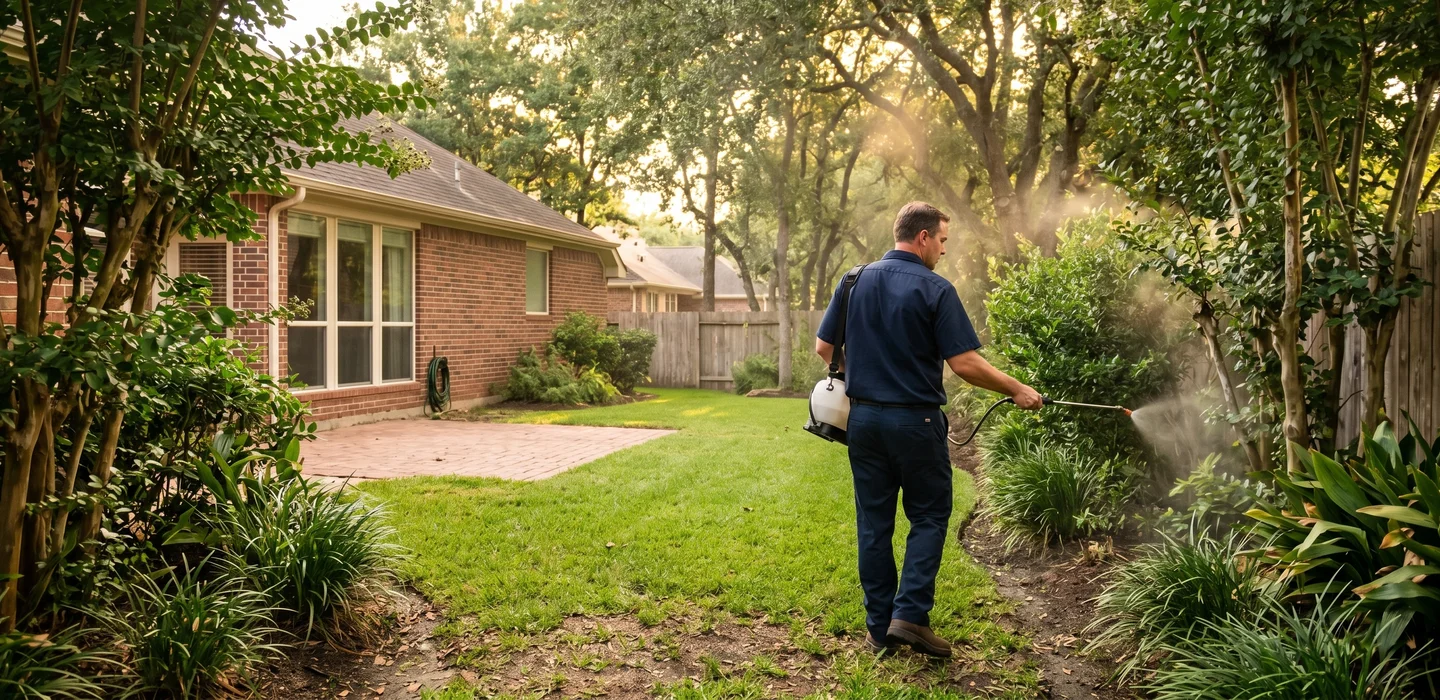
Accessible infested framing sections are treated with localized injection of EPA-registered termiticide directly into galleries through injection ports. This method delivers product precisely where the colony is active and causes minimal disruption to surrounding wood — particularly important in homes with original hardwood floors and decorative wood trim.
Surface Treatment for Accessible Areas
When galleries are not accessible for injection, surface application of residual termiticide to the exterior of infested wood sections can be effective in attic environments. Applied to rafter surfaces, ridge boards, and framing where visual inspection confirms active drywood infestation.
Old-Growth Wood Evaluation
Rice Village's 1920s-1950s homes contain original Douglas fir and heart pine framing that is no longer available in standard lumber. David evaluates whether infested sections retain structural integrity or require contractor assessment — providing a clear picture of treatment vs. replacement decisions.
Fumigation Scope Determination
When drywood termite activity is widespread across multiple inaccessible wall cavities and structural sections — beyond what spot treatment can reach — David's assessment will recommend fumigation and explain why. This honest determination is what distinguishes Resolve from companies that default to fumigation for all drywood infestations.
Post-Treatment Documentation and Follow-Up
Written treatment documentation is issued the same day. A 30-day follow-up inspection checks treated sections for new frass production, extension of gallery damage, or new activity in adjacent areas. Findings are documented and communicated clearly for real estate records and future WDO inspections.
How Drywood Termite Treatment Works in Rice Village
A precise, preservation-minded process that maps the infestation, chooses the right treatment method, and confirms effectiveness — without defaulting to fumigation as the path of least resistance.
- 1
David inspects all accessible interior and exterior wood elements for drywood termite signs — frass piles below exit holes, wing deposits near windowsills, and soft or hollow areas in wood when probed. Attic and wall framing inspection is included. All findings are mapped before treatment begins.
- 2
Based on the mapping, David determines whether the infestation is confined to accessible framing sections appropriate for spot treatment, or whether it has spread across inaccessible wall cavities requiring fumigation. The recommendation is explained clearly, with the reasoning behind it.
- 3
For spot treatment: injection ports are drilled into infested sections, termiticide is applied directly into galleries, and ports are sealed after treatment. Treated sections are labeled for the follow-up inspection. For fumigation: David coordinates the crew, preparation guidance, and post-fumigation clearance inspection.
- 4
A follow-up inspection at 30 days checks treated sections for new frass production and extension of activity. Results are documented in writing and added to the treatment record. If the follow-up finds any ongoing activity, David addresses it promptly as part of the treatment service.
Resolve Drywood Treatment vs. Companies That Default to Fumigation
| Feature | Resolve Pest and Termite | Companies That Default to Fumigation |
|---|---|---|
| Scope assessment determines spot treatment vs. fumigation | ✓ | Fumigation recommended for most drywood cases |
| Spot injection preserves original old-growth framing | ✓ | ✗ |
| Frass and gallery mapping before treatment | ✓ | Often skipped in favor of tenting |
| Owner personally conducts inspection and treatment | ✓ | ✗ |
| 30-day follow-up inspection included | ✓ | Often additional fee |
| Written documentation for real estate and lender use | ✓ | ✓ |
| No long-term contract required after treatment | ✓ | ✗ |
Case Study
Preserving Original 1930s Attic Framing With Spot Treatment Instead of Fumigation
The Problem
A Rice Village homeowner renovating a 1933 bungalow discovered what appeared to be drywood termite damage in the attic during a planned insulation upgrade. The contractor found frass deposits and exit holes in three adjacent rafter sections near the ridge board. The homeowner was concerned about preserving the original heart pine rafters — a unique material that could not be easily matched if sections required full replacement — and wanted to understand whether fumigation was truly necessary.
Our Solution
David inspected the attic thoroughly, probing the three affected rafter sections and checking adjacent framing for extension of gallery damage. The infestation was confirmed in the three identified rafters and had not extended to adjacent framing or the ridge board. Spot injection was applied to each infested rafter section through drilled injection ports, which were sealed after treatment. The original framing was preserved intact.
The Outcome
The 30-day follow-up inspection found no new frass production in any of the three treated sections and no new activity in adjacent rafters. The insulation upgrade proceeded as planned. The homeowner received written treatment documentation and disclosed the prior activity and completed treatment to potential buyers when they sold the property two years later — with no objections from the buyers' inspector.
Drywood Termite Treatment FAQs for Rice Village Homeowners
How do I know if I have drywood termites or subterranean termites in my Rice Village home?
Drywood termites nest inside dry wood and leave frass — small, pellet-like fecal droppings — near exit holes in windowsills, below attic access hatches, or on floors near walls. Subterranean termites enter from soil via mud tubes and are most often found in crawlspaces and along foundation walls. David's inspection identifies the species and location before any treatment decision.
Can spot treatment really work for drywood termites in an older attic?
Yes, when the infestation is accessible and contained. Spot injection delivers termiticide directly into drywood termite galleries in identifiable framing sections. When David can confirm the full boundary of the infestation through probing and frass mapping, spot treatment effectively eliminates the colony without fumigating the entire structure.
How does drywood termite frass help identify the infestation?
Drywood termite frass consists of distinct hexagonal pellets that accumulate below gallery exit holes. Finding fresh frass indicates an active infestation in the wood directly above. David maps frass locations during inspection to identify infested sections — frass mapping is a key step in determining whether the infestation is confined or distributed across multiple areas.
Will spot treatment require me to leave my home?
The treated room or attic space needs to be vacated during application and briefly after while the product settles. Household evacuation is not required for spot treatment. David specifies any preparation requirements — including temporarily moving furniture or clearing access to attic hatches — when scheduling the service.
How do drywood termites enter Rice Village homes?
Drywood termites enter through small cracks, crevices, and exposed wood surfaces — typically at windowsills, door frames, eave vents, roof joints, and any unfinished or unpainted wood on the exterior. Older Rice Village homes with aging exterior paint and wood trim present more entry opportunities than newer construction with modern sealing.
Is drywood termite treatment different for a newer Rice Village townhome vs. an older bungalow?
Yes, in practice. Older bungalows have more accessible attic framing, original wood throughout, and often more drywood termite entry points due to aging paint and trim. Newer townhomes and condos typically have less old-growth wood but may have wood structural elements and finish trim that are still vulnerable. Treatment approach adapts to what is actually present.
Related Termite Services in Rice Village
Rice Village Pest Control Hub
Termite Control in Rice Village
Termite Fumigation in Rice Village
Termite Inspection in Rice Village
Termite Treatment in Rice Village
Subterranean Termite Treatment in Rice Village
Drywood Termite Treatment Service
West University Place Drywood Termite Treatment
The Heights Pest Control