
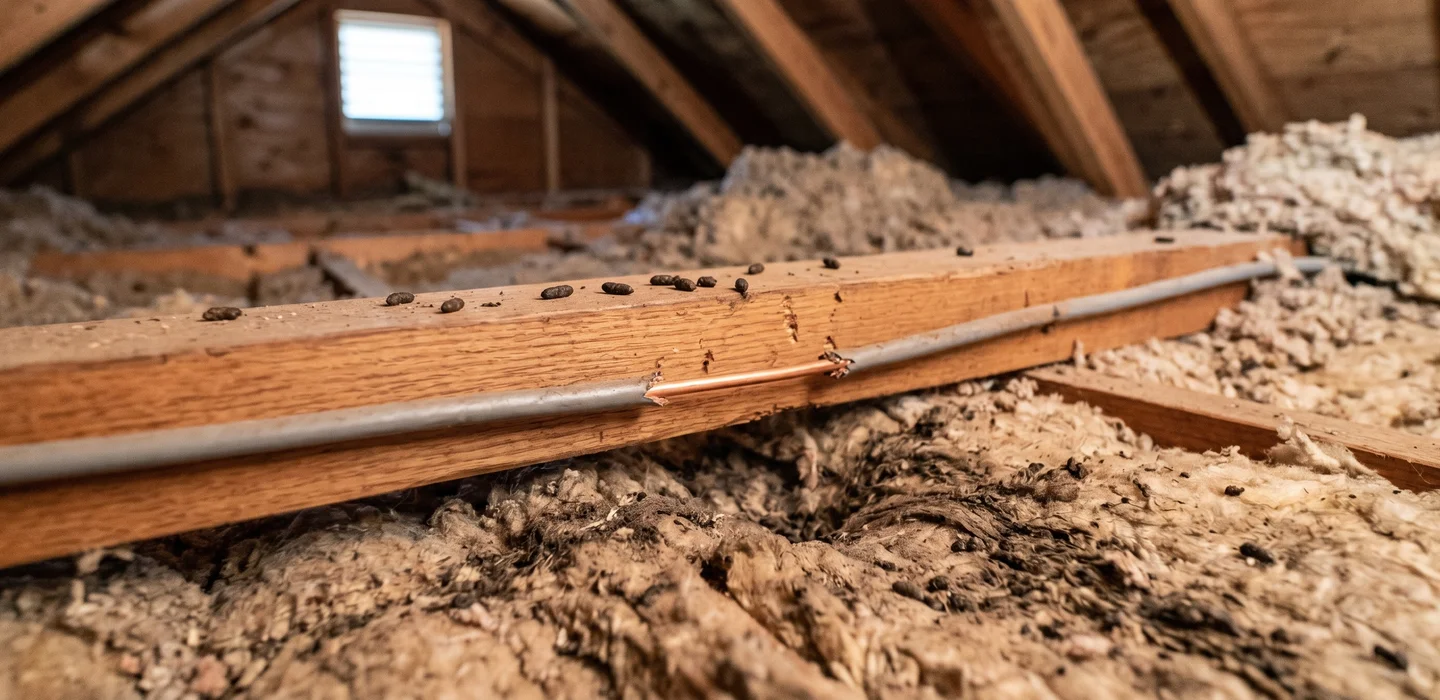
“We found drywood termite frass in our master bedroom during a ceiling repair — our home was built in 1966 and the attic framing had never been inspected. David found one active colony in a rafter section, did the spot treatment the same week, and sealed the entry points. No fumigation needed. Exactly the right call.”
Drywood Termite Treatment — Clear Lake, TX
Drywood Termite Treatment in Clear Lake, TX
Thousands of Clear Lake homes still have their original NASA-era attic framing from the 1960s and 1970s — unprotected wood that drywood termite colonies exploit for decades before owners notice. Resolve provides targeted drywood termite treatment that eliminates active colonies without requiring whole-house fumigation when the infestation is localized.
- Localized spot treatment for drywood colonies in attic rafters, soffits, and wood trim
- Whole-house fumigation when infestation is too widespread for spot treatment
- Inspection-first — fumigation is never recommended speculatively
- No disruption to dock, boat storage, or waterfront areas during treatment
Why Clear Lake Homeowners Choose Resolve for Drywood Termite Treatment
Decades of experience identifying drywood activity in original NASA-era construction — with treatment matched to what the inspection actually finds.
- Expert identification of drywood termite frass, galleries, and entry holes in original 1960s and 1970s framing
- Spot treatment preserves original attic framing without requiring household displacement
- Fumigation recommended only when infestation is genuinely too widespread for spot treatment
- Entry hole sealing after treatment prevents recolonization of treated framing
- David inspects and treats every Clear Lake property personally — no subcontractors
- Post-treatment follow-up inspection confirms colony elimination before the job is closed
Clear Lake Homeowners on Drywood Termite Treatment
Honest Recommendations NASA-Era Home Expertise No Unnecessary Fumigation
“I had gotten a quote from another company that immediately recommended fumigation without really explaining why. David inspected my 1970 home thoroughly, found drywood activity in two rafter zones, and said spot treatment would handle it. He was right — 60-day follow-up was clean. Appreciated the honest assessment.”
“Our waterfront home is one of the original builds from 1968 — beautiful original wood trim throughout. David treated a drywood colony in the soffit framing without touching the interior wood trim at all. He was careful and precise. The follow-up at six weeks found no new activity.”
Drywood Termite Treatment Services for Clear Lake Homes
From localized attic rafter treatment to whole-structure fumigation for widespread infestations — every method matched to the actual scope of the colony.
Attic Rafter Spot Treatment
Localized treatment injected directly into drywood termite galleries in individual rafter sections eliminates the colony at its source. Most effective for infestations limited to one or two accessible wood members in Clear Lake's original NASA-era framing.
Soffit and Wood Trim Treatment
Exterior soffits and decorative wood trim on Clear Lake's 1960s and 1970s homes are prime drywood termite entry points. Direct treatment and entry hole sealing stop colonies before they migrate deeper into the roof structure.
Entry Point Sealing
After treatment, entry holes bored by drywood termites are sealed with appropriate material to prevent recolonization. Entry point mapping ensures all known access points are addressed, not just the most visible.
Whole-Structure Fumigation
When drywood termite activity spans multiple zones throughout the attic or is in inaccessible locations where spot treatment cannot effectively penetrate, whole-structure fumigation provides complete colony elimination. Recommended only when inspection confirms this is genuinely necessary.
Pre-Sale Drywood Inspection
Many Clear Lake homes going on the market fail WDO inspections due to drywood termite evidence in attic framing — sometimes decades-old activity that only becomes apparent during renovation or careful inspection. Pre-listing assessment and treatment prevent closing delays.
Post-Treatment Monitoring
Follow-up inspection at 30 to 60 days confirms that treated colonies have been eliminated and no new activity is developing. For homes with persistent moisture exposure from the bay-area environment, annual inspection is recommended.
How Drywood Termite Treatment Works in Clear Lake
A thorough inspection drives every treatment decision — no assumptions, no default recommendations.
- 1
David inspects all accessible attic framing, soffits, wood trim, and interior wood members for drywood termite frass, gallery holes, and kick-out ports. Colony locations are mapped before any treatment decision is made.
- 2
If activity is localized to one or two accessible areas, spot treatment is recommended. If activity spans multiple zones in inaccessible framing, fumigation is discussed with a full explanation of why spot treatment would be insufficient.
- 3
Spot treatment is injected directly into gallery locations. Entry holes are sealed after treatment. For fumigation, David manages the full coordination including household preparation, tenting schedule, and re-entry clearance.
- 4
A follow-up inspection at 30 to 60 days confirms no new frass activity or gallery development. Ongoing annual inspection is recommended for Clear Lake's older homes given the humidity and moisture conditions that make recolonization a long-term risk.
Spot Treatment vs. Fumigation — What Your Clear Lake Home Actually Needs
| Feature | Targeted Spot Treatment | Whole-House Fumigation |
|---|---|---|
| No household displacement required | ✓ | ✗ |
| Effective for localized 1-2 zone infestations | ✓ | ✓ |
| Reaches galleries in inaccessible framing | ✗ | ✓ |
| Eliminates widespread multi-zone infestations completely | ✗ | ✓ |
| Preserves interior wood trim and features | ✓ | ✓ |
| Same-week scheduling | ✓ | ✗ |
| Recommended only when infestation scope requires it | ✓ | ✓ |
Case Study
Clear Lake: Drywood Colony in 1967 Attic Framing — Spot Treatment Avoids Fumigation
The Problem
A Clear Lake homeowner began a partial attic renovation in their 1967 ranch home and discovered what appeared to be termite damage in one rafter section. They were concerned that the age of the home meant infestation could be widespread throughout the original framing. A previous pest company had quoted them for whole-house fumigation without a thorough inspection.
Our Solution
David performed a complete attic inspection, examining every accessible rafter, collar tie, and ridge beam section. Active drywood termite gallery and frass evidence was found in two adjacent rafters in the affected renovation area. All other framing sections were clean. Spot treatment was applied to both affected rafters, entry holes were sealed, and no household displacement was required.
The Outcome
The 45-day follow-up found no new frass deposits or gallery activity in the treated sections or adjacent framing. The homeowner was relieved to avoid fumigation — and the renovation was able to proceed on schedule. An annual inspection was added to the plan given the home's age.

Drywood Termite Treatment FAQs — Clear Lake, TX
How do I know if I have drywood termites in my Clear Lake home?
The most common sign is small piles of frass — sand-like fecal pellets — below infested wood. These are often found on windowsills, attic floors, or baseboards below an infested rafter. Small round exit holes bored into wood surfaces are another indicator. If you find either sign in a home built before 1985 in Clear Lake, schedule an inspection promptly.
Are NASA-era Clear Lake homes at higher risk for drywood termites?
Yes. Original attic framing from the 1960s and 1970s has been exposed to decades of Clear Lake's bay-area humidity without treatment, making it substantially more susceptible than newer pressure-treated lumber. Many of these homes were never inspected for drywood termite activity. An inspection is a practical step for any owner of a pre-1980 home in the area.
Can drywood termite activity spread from one attic rafter to others over time?
Drywood termite colonies grow slowly compared to subterranean colonies, but over several years a colony can expand from one rafter to adjacent sections as the original gallery grows. This is why prompt treatment of a localized colony is more effective — and far less expensive — than waiting until the infestation has spread to multiple framing members.
Does spot treatment require any household preparation?
Localized attic rafter spot treatment requires no special household preparation and no displacement. David works in the attic directly. Residents can remain in the home throughout the treatment. This is one of the key advantages of spot treatment for a single-zone drywood infestation.
How long does drywood termite spot treatment take?
A typical spot treatment for one to three affected rafter sections in a Clear Lake attic takes two to three hours including entry hole sealing and documentation. Larger infestations covering more wood members may take longer depending on access requirements.
When is fumigation actually necessary for drywood termites in Clear Lake?
Fumigation is necessary when drywood termite activity is documented in four or more zones throughout the attic or in framing locations that are physically inaccessible for direct spot treatment injection. David makes this determination based on the inspection findings — fumigation is never recommended as a default approach.
Related Termite Services in Clear Lake
Protect Your Clear Lake Home's Original Framing From Drywood Termites
NASA-era attic framing is irreplaceable — once damaged, it is expensive to repair. An honest inspection from David tells you exactly what you're dealing with and whether spot treatment can resolve it without fumigation.