
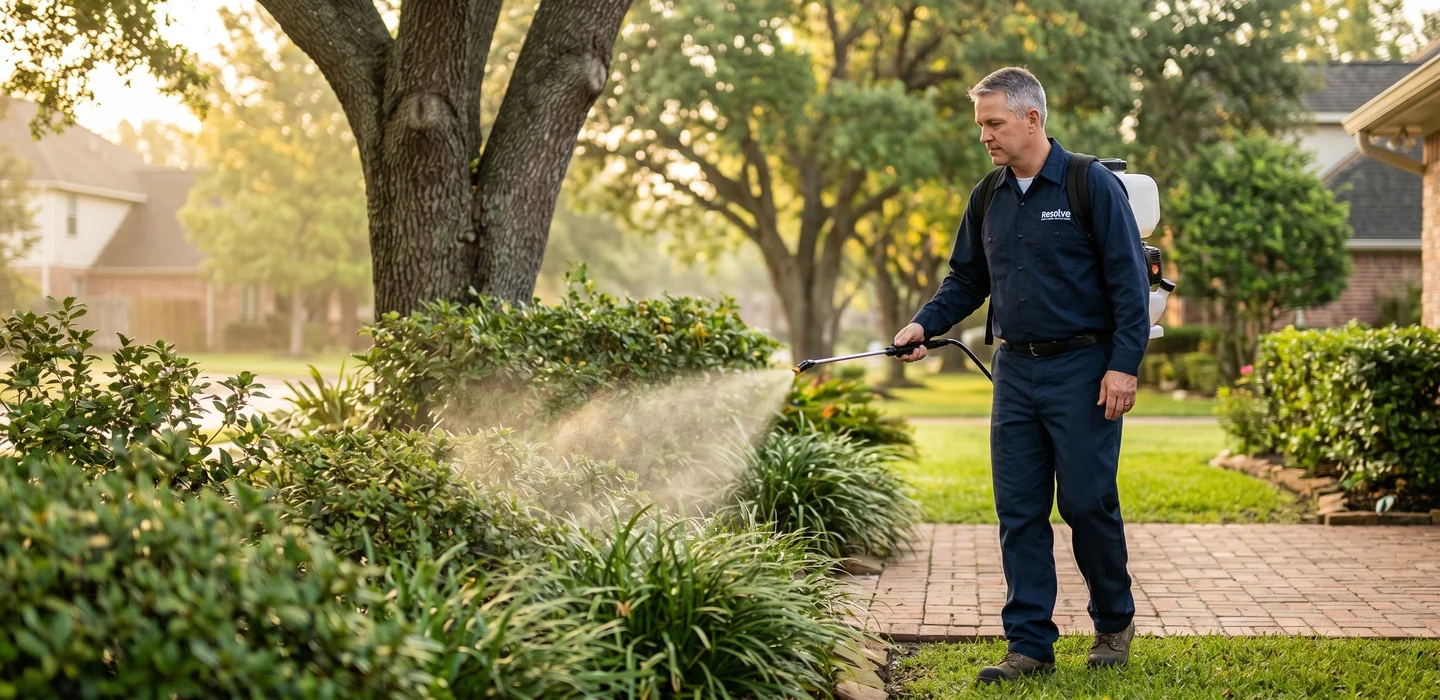
“We heard rats in the attic for months before calling Resolve. David found four entry points around the soffit and one gap near the chimney chase — all within reach of the oak branches overhead. After sealing and trapping, the attic noise stopped within two weeks. Thorough, honest, and professional.”
Rodent Control — Tanglewood
Rodent Control in Tanglewood, TX
Tanglewood's iconic live oak canopy is beautiful — and it creates direct aerial highways that roof rats use to move between homes and access rooflines year-round. Resolve's exclusion-first rodent control seals entry points across your roofline and attic, eliminating the problem at its source without interior rodenticides.
- Canopy-based roof rat access identified and sealed across roofline and soffit
- Snap traps with no interior rodenticide use — safe for pets and children
- Attic cleanup and sanitization available after confirmed rodent access
Why Tanglewood Has One of Houston's Most Persistent Roof Rat Problems
Roof rats follow the canopy — and Tanglewood's continuous live oak coverage creates the ideal aerial highway between properties and into attics.
- Tanglewood's mature canopy allows roof rats to travel tree-to-roofline without touching the ground
- Exclusion-first approach: sealing entry points stops rodents at the roofline before attic access is established
- No interior rodenticides — snap traps only, protecting pets and children in high-end living environments
- Attic insulation inspection included to identify areas compromised by rodent activity
- Post-exclusion monitoring confirms no new entry after sealing is complete
- Owner-operated — David personally performs every inspection and exclusion visit
Tanglewood Residents on Resolve's Rodent Control
No Interior Rodenticides Exclusion-First Approach Canopy Access Sealed
“My concern was using rodenticides near our two dogs. David uses snap traps only — no poison anywhere on the property — and he placed them in attic areas completely inaccessible to pets. The problem was resolved without any risk to our animals. That approach matters in a home like ours.”
“The roof rat problem in our Tanglewood-area home was clearly coming from the oak tree overhanging the rear corner. David trimmed the branch recommendation, sealed the access point, and the problem was gone. He also checked the attic insulation for damage — something no one else had offered to do.”
Rodent Control Services for Tanglewood Properties
From canopy-access exclusion to attic sanitization — comprehensive roof rat control for Tanglewood's most challenging residential environment.
Canopy Access Point Identification
David inspects the full roofline, soffit, fascia, and gable vents with tree canopy access in mind — identifying every point where live oak branches bring roof rats within jumping or climbing range of the home.
Exclusion Sealing
All identified entry points are sealed with appropriate materials — hardware cloth, copper mesh, foam, or metal flashing depending on the gap type. Exclusion is the most effective long-term rodent control for Tanglewood properties with continuous canopy cover.
Snap Trap Program
Snap traps are set in attic areas, wall void access points, and exterior zones adjacent to confirmed entry routes. No interior rodenticides are used — protecting pets and children in occupied living spaces.
Attic Inspection for Damage and Nesting
David inspects attic insulation and framing for rodent nesting material, droppings, and insulation displacement — documenting the extent of access and identifying areas that may require sanitization or insulation replacement.
Post-Exclusion Monitoring
After sealing, David schedules a follow-up visit to confirm no new entry points have been created and verify trap activity has ceased. Monitoring continues until the attic is confirmed clear.
Branch Trimming Guidance
David identifies which live oak branches are providing direct roofline access and recommends specific trimming distances. Maintaining 6-8 feet of clearance between the canopy and roofline is the most effective long-term roof rat prevention for Tanglewood properties.
How Roof Rat Control Works in Tanglewood
An exclusion-first process that stops roof rats at the roofline rather than managing them indefinitely inside the attic.
- 1
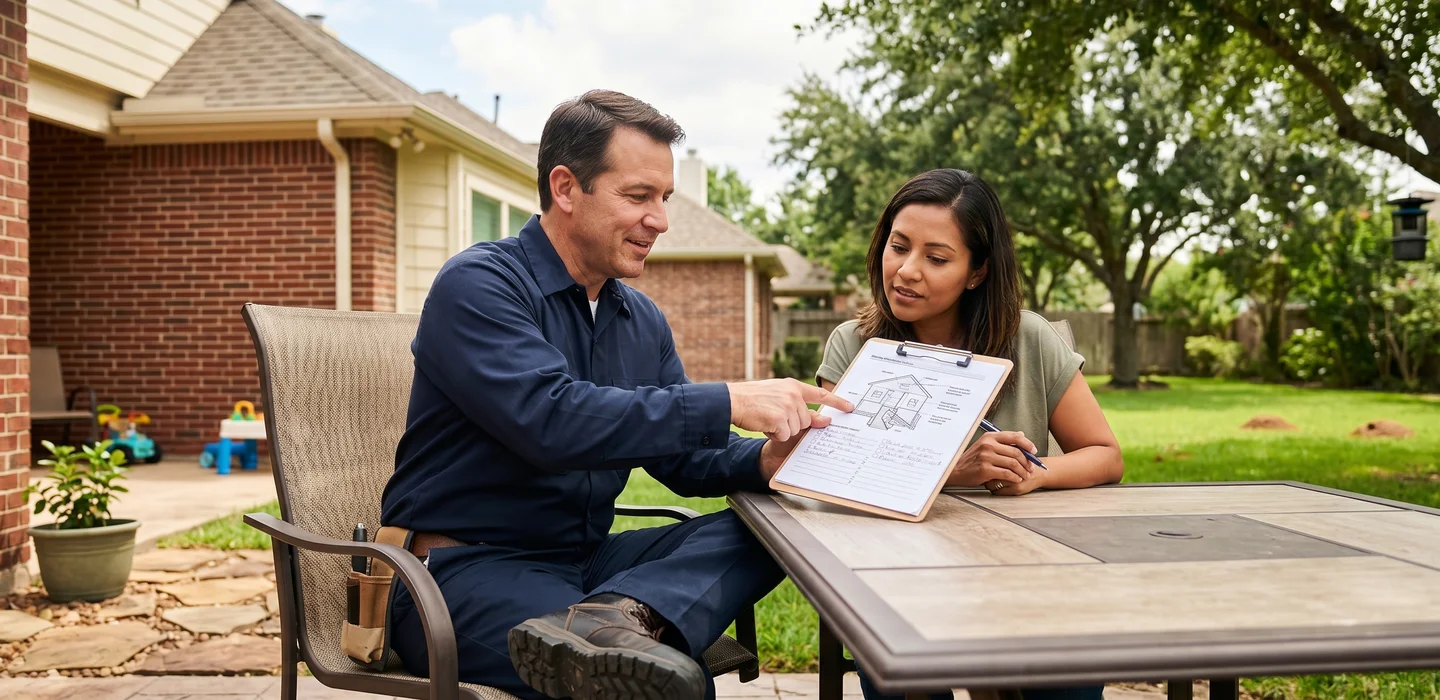
David inspects the full exterior roofline, soffit, fascia, and attic access areas, mapping every gap or opening that canopy-traveling roof rats can use to enter the structure. Canopy-to-roofline distance is assessed at all tree interface points.
- 2
All identified entry points are sealed with appropriate rodent-proof materials. Snap traps are set in the attic and exterior zones adjacent to confirmed entry routes before and during the exclusion process.
- 3
David monitors trap activity and removes captured rodents during scheduled follow-up visits. Traps remain set until no new activity is confirmed — typically 2-4 weeks after exclusion sealing is complete.
- 4
A final inspection confirms no new entry has occurred and the attic is clear. David provides branch trimming distance recommendations and other guidance to reduce future canopy-based access risk.
Resolve vs. Generic Rodent Control Programs in Tanglewood
Roof rat control in Tanglewood requires exclusion-first expertise — not just interior bait stations that manage rodents without stopping their entry.
| Feature | Resolve Pest and Termite | Generic Rodent Programs |
|---|---|---|
| Canopy-based roof access identified and sealed | ✓ | Rarely |
| No interior rodenticides — snap traps only | ✓ | ✗ |
| Attic insulation damage assessment included | ✓ | ✗ |
| Post-exclusion monitoring included | ✓ | Add-on fee |
| No long-term contract required | ✓ | ✗ |
| Owner performs every visit | ✓ | ✗ |
| Branch trimming guidance provided | ✓ | ✗ |
Case Study
How Resolve Eliminated a Roof Rat Colony Using Tanglewood's Own Canopy as the Starting Point
The Problem
A Tanglewood homeowner with three large live oaks along the rear property line called Resolve after hearing scratching above the master bedroom ceiling. David's inspection found five active entry points along the rear soffit — all within two feet of oak branches — plus evidence of an established nesting area in the attic insulation directly above the bedroom.
Our Solution
David sealed all five entry points with hardware cloth and copper mesh appropriate for the gap type at each location. Snap traps were set in the attic near the nesting area and at the base of the sealed soffit entry zones. David also identified two oak branches extending within three feet of the roofline and advised the homeowner to have those trimmed to a minimum six-foot clearance.
The Outcome
Trap activity ceased after 18 days — confirming the colony was eliminated rather than simply displaced. The attic nesting material was removed and the damaged insulation documented for replacement. The homeowner had the identified branches trimmed, and a six-month follow-up inspection confirmed no new entry.
Rodent Control FAQs for Tanglewood Homeowners
Why does Tanglewood have such a persistent roof rat problem?
Roof rats are arboreal — they prefer to travel along tree branches and rooftops rather than on the ground. Tanglewood's mature live oak canopy, which creates a continuous overhead corridor for blocks in some areas, is ideal roof rat habitat. With so many trees touching or nearly touching rooflines, roof rats can move between homes without ever descending to the ground.
Why don't you use rodenticide bait inside the home?
Interior rodenticides carry two serious risks in occupied homes: secondary poisoning of pets or children who contact a poisoned rodent, and rodents dying inside wall voids or attic spaces where they are inaccessible and create decomposition odor problems. Snap traps combined with exclusion sealing eliminate the problem cleanly and without either risk.
How long does it take to resolve a roof rat problem?
After exclusion sealing is complete, active populations inside the attic are typically eliminated through snap trapping within 2-4 weeks. The timeline depends on the size of the colony and whether all entry points are successfully identified and sealed. David monitors trap activity until no new captures are recorded over multiple check intervals.
Can roof rats cause damage to my attic insulation?
Yes. Roof rats nest in attic insulation — compressing, shredding, and contaminating it with droppings and urine. In active infestations that have been established for weeks or months, insulation damage is common. David documents the extent of damage during the inspection and can advise on cleanup and replacement options.
How far should live oak branches be from my roofline to prevent roof rat access?
David recommends maintaining at least 6-8 feet of clearance between live oak branch tips and any structural surface — roofline, soffit, chimney, or gutter. Roof rats can jump 4 feet horizontally and 3 feet vertically, so branches within that range are considered active access points regardless of whether they are touching the structure.
Do you handle attic cleanup after a rodent infestation?
Yes. David inspects and documents attic contamination and can coordinate cleanup and sanitization as a follow-up service. For properties where rodent access was established for an extended period, attic sanitization and insulation assessment are important steps before considering the problem fully resolved.
Stop Roof Rats from Using Tanglewood's Canopy to Access Your Home
Call David at (832) 519-6650 for an exclusion inspection that identifies every canopy-based entry point on your roofline. No interior rodenticides, no contracts, no subcontractors.