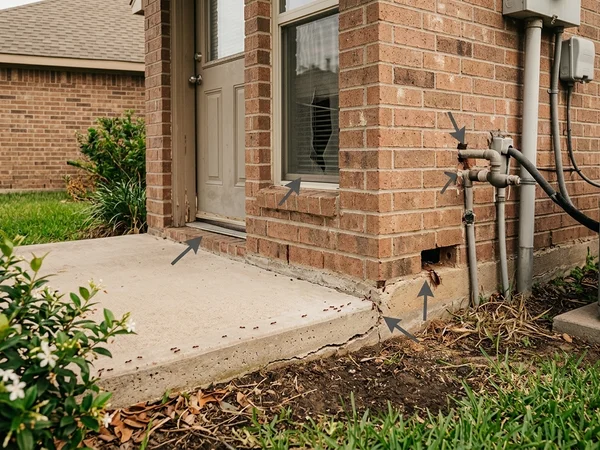
“Our greenbelt-adjacent lot had mud tubes along the back foundation every spring for three years before we called David. The previous treatments from other companies never held because they didn't address the greenbelt side properly. David applied extra barrier density along the back slab edge and installed Sentricon stations along the tree line. Haven't seen a mud tube since.”
Subterranean Termite Treatment — Kingwood, TX
Subterranean Termite Treatment in Kingwood, TX
Kingwood's greenbelt is one of the most prolific subterranean termite environments in Harris County. Forest soil sustains massive Eastern Subterranean and Formosan termite colonies that forage continuously from the greenbelt into adjacent home foundations. Resolve provides targeted liquid barrier and Sentricon treatment calibrated for the unique pressure Kingwood lots face — particularly along the 75-plus miles of greenbelt trail perimeter.
- Full-perimeter liquid barrier with greenbelt-edge density calibration
- Sentricon Always Active bait stations for continuous forest-perimeter interception
- WDO inspection fee ($175) credited toward treatment
Why Kingwood Homeowners Trust Resolve for Subterranean Termite Treatment
Deep knowledge of how Kingwood's forest soil sustains colony pressure — and how to stop it.
- David personally maps each property's greenbelt foraging corridors before applying treatment
- Liquid barrier density is calibrated for forest-edge lots — not a standard per-linear-foot application
- Sentricon station placement optimized for greenbelt perimeter interception where colony pressure originates
- 20+ years treating Eastern Subterranean and Formosan colonies in Harris County's organic-rich soils
- WDO report documentation available for real estate transactions — fast turnaround
- No contracts — annual monitoring available but never required
Kingwood Homeowners on Resolve Subterranean Termite Treatment
Forest-Edge Expertise Sentricon Monitoring No Contracts
“Harvey flooded our neighborhood in 2017 and about two years later termite activity showed up along both side foundations. David understood immediately — he said post-Harvey colony displacement is one of the most common situations he sees in Kingwood. Treatment was thorough and he explained every product he used. Follow-up was clean.”
“We had an active Formosan colony that swarm season revealed — dozens of swarmers inside near a wall outlet. David was out the next day, confirmed the colony foraging location in the slab, and applied the liquid barrier the following morning. He spent extra time on the side of the house nearest the drainage swale. Thorough and fast.”
Our Subterranean Termite Treatment Services for Kingwood Homes
Targeted treatment for Kingwood's most common and destructive termite type — from forest-edge lots to post-Harvey rebuild situations.
Full-Perimeter Liquid Barrier
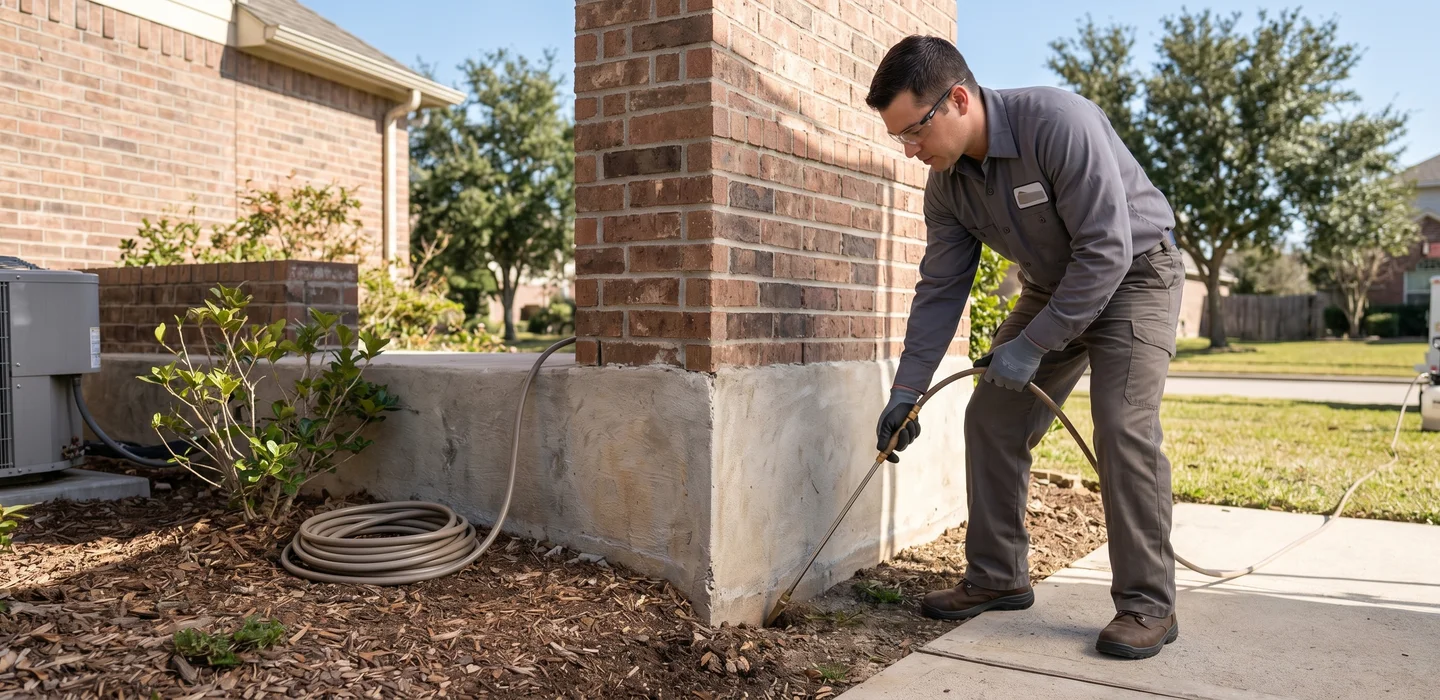
Continuous termiticide trench-and-treat along the entire foundation perimeter. For Kingwood greenbelt-adjacent lots, additional product volume is applied along forest-facing slab edges where foraging pressure is most intense. Kills active colonies and prevents new activity for several years.
Sentricon Always Active Bait Stations
In-ground stations placed at optimized intervals around the property, with increased density along the greenbelt perimeter. Worker termites carry the bait back to the colony, eliminating it at the queen. Ideal for properties where ongoing forest-soil pressure makes permanent monitoring essential.
Formosan Colony Treatment
Formosan subterranean termites are larger, more aggressive, and can cause damage faster than Eastern Subterranean colonies. Kingwood's warm, humid forest environment is ideal Formosan habitat. David's treatment protocol accounts for Formosan colony size and foraging radius specifically.
Post-Harvey Foundation Assessment
Homes that flooded in Harvey often had foundation soil disrupted during remediation or reconstruction, displacing established colonies. David identifies Harvey-specific foundation exposure zones and treats them with targeted barrier application to address colony pressure created by the 2017 flood event.
Drainage Swale and Low-Point Treatment
Kingwood's topography creates drainage swales and low-lying areas that retain moisture after rain events — ideal subterranean termite habitat. Resolve identifies moisture-retaining landscape features adjacent to the foundation and treats the soil-to-structure approach pathways they create.
Annual Monitoring Re-Inspection
Yearly inspection confirms treatment effectiveness, checks bait station activity levels, and identifies any new foraging. On Kingwood greenbelt-adjacent lots, annual monitoring is not optional — it's the difference between ongoing protection and starting over.
How Subterranean Termite Treatment Works in Kingwood
A methodical, greenbelt-aware treatment process — from foraging corridor mapping to colony confirmation.
- 1
Foraging Assessment
David inspects the foundation perimeter, slab edges, and greenbelt-facing lot edge to map the colony's foraging corridor — identifying where termites are entering, which directions they're traveling, and what moisture or food sources are sustaining the approach path.
- 2
Treatment Plan
A liquid barrier, Sentricon stations, or both are recommended based on the assessment. David explains the reasoning — greenbelt-adjacent lots typically benefit from both for sustained protection. Treatment scope and cost are confirmed before any work begins.
- 3
Barrier and Station Installation
Liquid termiticide is applied in a continuous trench along the foundation, with extra density on greenbelt-facing edges. Sentricon stations are installed at optimized intervals with concentration along the forest perimeter where foraging originates.
- 4
Follow-Up and Confirmation
A 30 to 45-day follow-up confirms mud tube activity has stopped and bait stations are being used. David checks station activity and notes any signs of new colony pressure from the forest soil. Annual monitoring keeps Kingwood lots protected long term.
Resolve vs. National Termite Companies for Subterranean Treatment in Kingwood
| Feature | Resolve Pest and Termite | National Companies |
|---|---|---|
| Owner maps greenbelt foraging corridor before treatment | ✓ | ✗ |
| Extra barrier density on greenbelt-facing slab edges | ✓ | ✗ |
| Sentricon placement calibrated for forest perimeter | ✓ | ✗ |
| Post-Harvey displacement assessment included | ✓ | ✗ |
| No long-term service contracts required | ✓ | ✗ |
| Owner personally applies every treatment | ✓ | ✗ |
| Liquid barrier and Sentricon both available | ✓ | ✓ |
Case Study
Kingwood: Formosan Colony Intercepted Along Drainage Swale Approach
The Problem
A Kingwood homeowner in a Hunters Ridge village home noticed Formosan swarmer wings inside near two first-floor windows in late April. A drainage swale ran along the rear property line between the home and the greenbelt trail, and the area had retained standing water after a spring storm. A prior inspection had not identified active colony activity — but swarming indoors clearly indicated a colony already established in the soil near the structure.
Our Solution
David's inspection found active Formosan foraging mud tubes along the rear foundation in two sections adjacent to the drainage swale's closest approach to the slab. The swale's moisture retention had created a prime foraging route from the greenbelt directly to the foundation. A full-perimeter liquid barrier was applied with maximum density along the rear swale-adjacent slab edge. Eight Sentricon stations were installed in an arc from the swale edge to the rear corners — optimized for the colony's identified approach path.
The Outcome
A 45-day follow-up found no new mud tube activity and no swarmer evidence inside the home. Sentricon stations along the drainage swale recorded strong intercept activity, confirming the colony had shifted from structural foraging to bait consumption. The homeowner modified the drainage swale landscaping to reduce standing water retention near the foundation, and enrolled in annual monitoring.
Subterranean Termite Treatment FAQs for Kingwood, TX
What makes Kingwood's greenbelt so dangerous for subterranean termite activity?
Kingwood's forest soil is rich in organic matter — decomposing leaves, pine straw, fallen limbs, and rotting stumps — which is exactly what subterranean termites use as both food and moisture source. The greenbelt creates a continuous foraging environment that borders home foundations on lots throughout every Kingwood village. There is no seasonal break in this pressure.
What is the difference between Eastern Subterranean and Formosan termites in Kingwood?
Both species are active in Kingwood and both travel through soil, but Formosan colonies are much larger — sometimes containing several million workers versus the several hundred thousand typical of Eastern Subterranean colonies. Formosans cause damage faster and are more difficult to eliminate with bait alone. Kingwood's warm, humid forest environment supports both species year-round.
Did Hurricane Harvey change the termite situation in Kingwood long term?
Yes. Harvey's prolonged flooding forced established subterranean and Formosan colonies throughout Kingwood to relocate from saturated soil. Many of those displaced colonies found new territory adjacent to home foundations — particularly homes that were rebuilt or renovated after the flood, which had disturbed exterior foundation soil without applying termite treatment. Post-Harvey colony displacement is one of the most common scenarios David sees in Kingwood.
How long does liquid barrier treatment last in Kingwood's soil?
Termidor and similar termiticides remain effective in the soil for 5 to 10 years under normal conditions. In Kingwood, heavy rainfall events can gradually reduce effectiveness in low-lying areas near drainage swales. Annual inspections identify any reduction in barrier coverage and allow targeted re-treatment before colonies re-establish foraging routes.
Is Sentricon enough on its own for a greenbelt-adjacent Kingwood lot?
Sentricon is highly effective at eliminating colonies but works over weeks to months as termites carry bait back to the colony. For homes with active infestation already in progress — mud tubes, swarmer evidence, or visible damage — a liquid barrier is needed first for immediate elimination. Sentricon then provides the long-term monitoring layer that greenbelt lots require.
Do I need annual re-treatment for subterranean termites in Kingwood?
Re-treatment is not typically needed annually, but annual monitoring inspections are essential on greenbelt-adjacent lots. The inspection confirms barrier effectiveness, checks Sentricon bait station activity, and identifies any new foraging before it reaches the structure. Early interception on a $400 monitoring visit beats a $3,000 treatment after a colony has established inside the wall.
Related Termite and Pest Services in Kingwood
Kingwood Pest Control Hub
All pest and termite services for Kingwood, TX.
Termite Control in Kingwood
Comprehensive termite control overview for Kingwood.
Termite Treatment in Kingwood
Liquid barrier and Sentricon options for Kingwood foundations.
Termite Inspection in Kingwood
WDO inspections for Kingwood's active resale market.
Subterranean Termite Treatment (Service Overview)
Our full subterranean termite treatment service overview.
Harris County Pest Control
Pest and termite services across Harris County.
Cypress Subterranean Termite Treatment
Subterranean termite services for Cypress, TX.
Stop Subterranean Termites at the Greenbelt Edge
Kingwood's forest soil keeps colony pressure high year-round on greenbelt-adjacent lots. David personally maps every property's foraging corridor and calibrates treatment for the specific conditions your lot faces. The $175 inspection fee is credited toward treatment.