
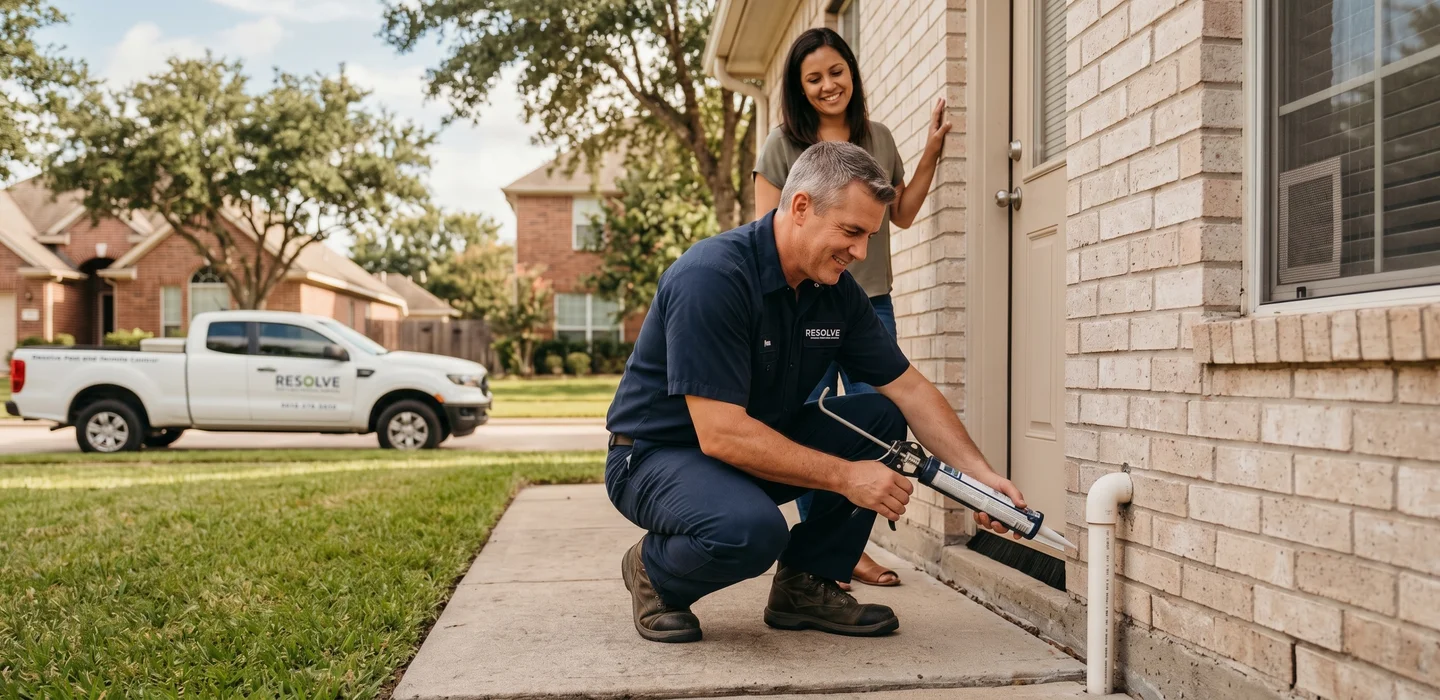
“Roof rats in the attic — we could hear them moving at night. David did a full inspection, found three entry points at the soffit line near the oak tree, and placed snap traps throughout the attic. He came back twice to check traps and then sealed every entry point he could access. We haven't heard anything in six months.”
Houston Rodent Control
Rodent Control in Houston, TX
Roof rats are endemic to Houston's inner loop. The Heights, Montrose, Midtown, Museum District, and EaDo neighborhoods have the highest roof rat activity in Harris County due to dense live oak and pecan canopy that provides direct roof access. Resolve provides roof rat trapping, population reduction, and exclusion sealing to eliminate active infestations and prevent re-entry.
- Roof rat identification and trapping — snap traps at confirmed activity points in attic and entry areas
- Exclusion sealing at soffit gaps, fascia board gaps, utility penetrations, and roof-line entry points
- Attic inspection to confirm extent of activity and identify all structural entry points
- No poison bait stations inside the structure — avoids dead rodent odor and secondary poisoning risk to owls and hawks
What Makes Resolve's Houston Rodent Control Effective
Trapping plus exclusion — stopping the current population and sealing out future entry.
- Attic inspection confirms active roof rat entry points and population extent before treatment begins
- Snap trap placement at all confirmed activity locations — the most effective rodent removal method for roof rat infestations
- Exclusion sealing at every identified entry gap — soffit vents, fascia board gaps, pipe penetrations, and roof line openings
- No interior poison bait stations — eliminates the risk of rodents dying in inaccessible wall voids and producing odor
- Houston's inner-loop tree canopy assessed — large oaks and pecans that provide roof access are noted for ongoing management
- Follow-up trap checks confirm population reduction before exclusion is finalized
Houston Homeowners on Resolve's Rodent Control
Roof rat specialists Exclusion sealing No interior poison
“I called three companies and two of them immediately proposed bait stations in the attic. David was the only one who explained why interior bait stations create a dead-rodent-in-wall-void problem and that exclusion sealing after trapping is the right approach. He was right on both counts.”
“Roof rats had been getting in through an old pipe penetration above the kitchen. David found it on the first inspection. Trapped the active population, sealed the penetration and three other gaps at the soffit. Explained that the pecan tree overhanging the roof would need trimming back as part of the long-term solution. Very thorough.”
Rodent Control Services Resolve Provides in Houston
Trapping, exclusion, and attic inspection for Houston's roof rat endemic neighborhoods.
Attic Inspection and Entry Point Mapping
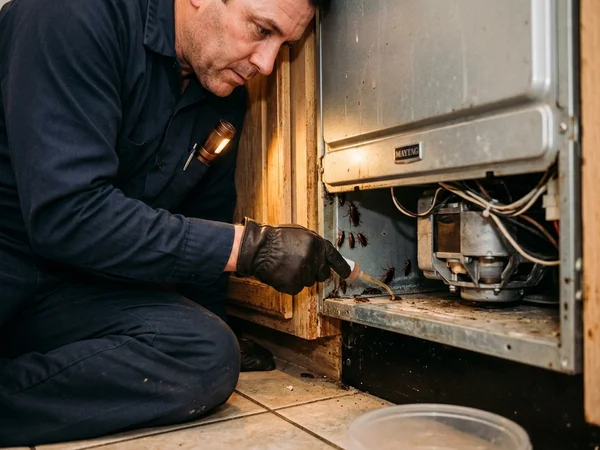
David inspects the attic for rodent droppings, nesting material, gnaw marks, and grease smears along travel routes. All identified entry points — at the roofline, soffit, fascia, gable vents, and utility penetrations — are documented before any treatment begins.
Snap Trap Installation
Snap traps placed at all confirmed activity locations in the attic along travel routes — not poison bait stations that produce dead rodent odor in wall voids. David checks and resets traps on a scheduled basis until the active population is eliminated.
Structural Exclusion Sealing
After the active population is reduced, all identified entry points are sealed with appropriate materials — hardware cloth at vent openings, caulk at smaller gaps, and sheet metal or cement board at larger structural gaps. Houston's wood-frame construction has more potential entry points than newer slab homes.
Tree Canopy Assessment
Heights, Montrose, and Garden Oaks properties with large live oaks or pecans overhanging the roofline have ongoing roof rat access that exclusion alone cannot solve. David notes which trees provide direct roof contact and recommends branch trimming as part of the long-term rodent management strategy.
Exterior Rodent Pressure Reduction
Exterior rodent pressure from neighboring properties, wood piles, or yard debris contributes to interior infestation pressure. David advises on exterior harborage reduction and can apply exterior bait stations away from the structure to reduce the surrounding population.
Follow-Up Trap Checks
Regular trap checks confirm population reduction — traps are reset or repositioned based on activity patterns. Exclusion sealing is finalized only after trap activity confirms the interior population has been substantially reduced.
How Resolve Eliminates Roof Rats in Houston
Inspect the attic, trap the population, seal the entry — in that order.
- 1
Attic Inspection
David inspects the attic and roofline for entry points, rodent evidence, and travel routes. All entry gaps — soffit vents, fascia openings, pipe penetrations, and gable vent gaps — are identified and documented. The inspection establishes where traps should be placed for maximum effectiveness.
- 2
Snap Trap Placement
Snap traps are placed along confirmed travel routes in the attic — at the points where droppings, grease smears, or gnaw evidence indicate regular rodent movement. Trap check visits are scheduled every 3-7 days until activity slows.
- 3
Population Confirmation and Exclusion
When trap activity drops and attic inspection confirms population reduction, structural exclusion sealing begins. All identified entry points are sealed with appropriate materials. Exclusion before trapping is complete traps rodents inside and prolongs the infestation.
- 4
Final Inspection and Long-Term Recommendations
A final inspection confirms no new entry activity. David provides written recommendations for tree trimming, exterior harborage reduction, and structural maintenance items that contribute to ongoing rodent pressure in Houston's inner-loop neighborhoods.
Trapping and Exclusion vs Interior Bait Stations for Roof Rats
Why the method matters for Houston's most common rodent infestation type.
| Feature | Trapping and Exclusion | Interior Bait Stations |
|---|---|---|
| Eliminates the interior population | ✓ | Yes — but creates dead-in-wall-void risk |
| Risk of dead rodent odor in wall voids | ✗ | ✓ |
| Addresses structural entry points | ✓ | ✗ |
| Secondary poisoning risk to owls and hawks | ✗ | ✓ |
| Confirms population reduction before sealing | ✓ | ✗ |
| Re-entry prevented after treatment | ✓ | ✗ |
| Appropriate for Houston inner-loop homes | ✓ | Discouraged — dead-in-attic risk |
Case Study
Heights Bungalow: Roof Rat Infestation Eliminated with Snap Trapping and Five-Point Exclusion Seal
The Problem
A homeowner in The Heights had been hearing roof rat activity in the attic for approximately two months. A previous pest company had placed bait stations in the attic without inspecting the roofline for entry points. Three weeks after bait station installation, a strong odor began coming from the ceiling of the master bedroom — consistent with a rodent dying in an inaccessible wall cavity.
Our Solution
David inspected the attic and found five structural entry points — a gap at the fascia board near the oak tree overhang, two open soffit vent corners, a pipe penetration above the kitchen, and a gap at the gable vent screen. He removed the existing bait stations and replaced them with snap traps at all confirmed travel routes. Three trap check visits over 18 days eliminated the active population before exclusion began.
The Outcome
All five entry points were sealed after the final trap check confirmed no new activity. The master bedroom odor resolved within two weeks as the previously poisoned rodent fully decomposed. No new attic activity was detected at the 90-day follow-up. The homeowner trimmed the oak branch that had been providing direct roof contact — recommended by David as the structural gap prevention that exclusion sealing alone cannot address.
Rodent Control FAQs for Houston Homeowners
Why are roof rats so common in the Heights, Montrose, and Midtown?
Roof rats are arboreal rodents that travel and nest in trees and elevated structures rather than underground. Houston's inner-loop neighborhoods have dense canopy of mature live oaks and pecan trees that provide direct access from tree branch to roofline. Older home construction in these areas has more gaps at the soffit, fascia, and utility penetrations than newer construction. The combination makes inner-loop Houston neighborhoods the highest roof rat density area in Harris County.
What is the difference between roof rats and Norway rats?
Roof rats are slim, agile climbers — they travel tree canopy and rooflines and nest in attics and elevated structures. Norway rats are larger, stockier burrowers that nest in the ground, beneath slabs, and in lower building areas. Roof rats are by far the more common species in Houston's inner-loop residential areas. Norway rats are more typical of commercial, industrial, and flood-prone areas. Treatment approach differs significantly between the two species.
How do I know if I have roof rats in my attic?
Scratching or running sounds in the attic or ceiling at night — roof rats are nocturnal and most active after dark. Droppings in the attic that are roughly three-quarters of an inch long, cylindrical, with pointed ends. Gnaw marks on attic wood, insulation disturbance, or nesting material in a corner of the attic. Grease smear marks along attic framing at travel routes.
Should I use poison bait for roof rats in my attic?
Interior attic bait stations are not recommended for roof rat infestations in Houston homes. Rodents that consume bait and die in inaccessible wall voids or attic spaces produce odor that can persist for weeks. Bait also poses secondary poisoning risk to owls and hawks that are natural rat predators in Houston neighborhoods. Snap trapping followed by exclusion sealing is the standard effective approach.
How many entry points do roof rats typically use?
A typical Heights or Montrose bungalow with an active roof rat infestation has between two and seven structural entry points — combinations of fascia gaps, soffit vents, pipe penetrations, and gable vent openings. Sealing only one or two while leaving others open allows the population to rebound through the unsealed gaps. A thorough roofline inspection identifies all entry points before exclusion work begins.
Can roof rats come back after exclusion?
If all structural entry points are properly sealed, new rats cannot enter the structure. However, if a tree branch grows back into roof contact, a sealed gap is damaged by weather or a contractor, or a new structural gap opens, roof rats can re-infest. Annual inspection of the roofline and attic is the most reliable way to catch new entry conditions before they become a full infestation.
Related Pest Services in Houston
Houston Pest and Termite Hub
All pest and termite services in Houston, TX.
Harris County Service Area
Pest and rodent control across all of Harris County.
Pest Control in Houston
Year-round pest control for Houston homes and businesses.
Mosquito Control in Houston
Barrier spray for Houston yards during mosquito season.
Termite Control in Houston
Termite control for Houston homes and real estate.
Rodent Control Service Page
Full overview of Resolve's rodent control services.
Get Rodent Control in Houston — Trapping and Exclusion, Done Right
David inspects the attic and roofline, traps the population, then seals every entry point. No interior poison bait stations that create more problems than they solve.