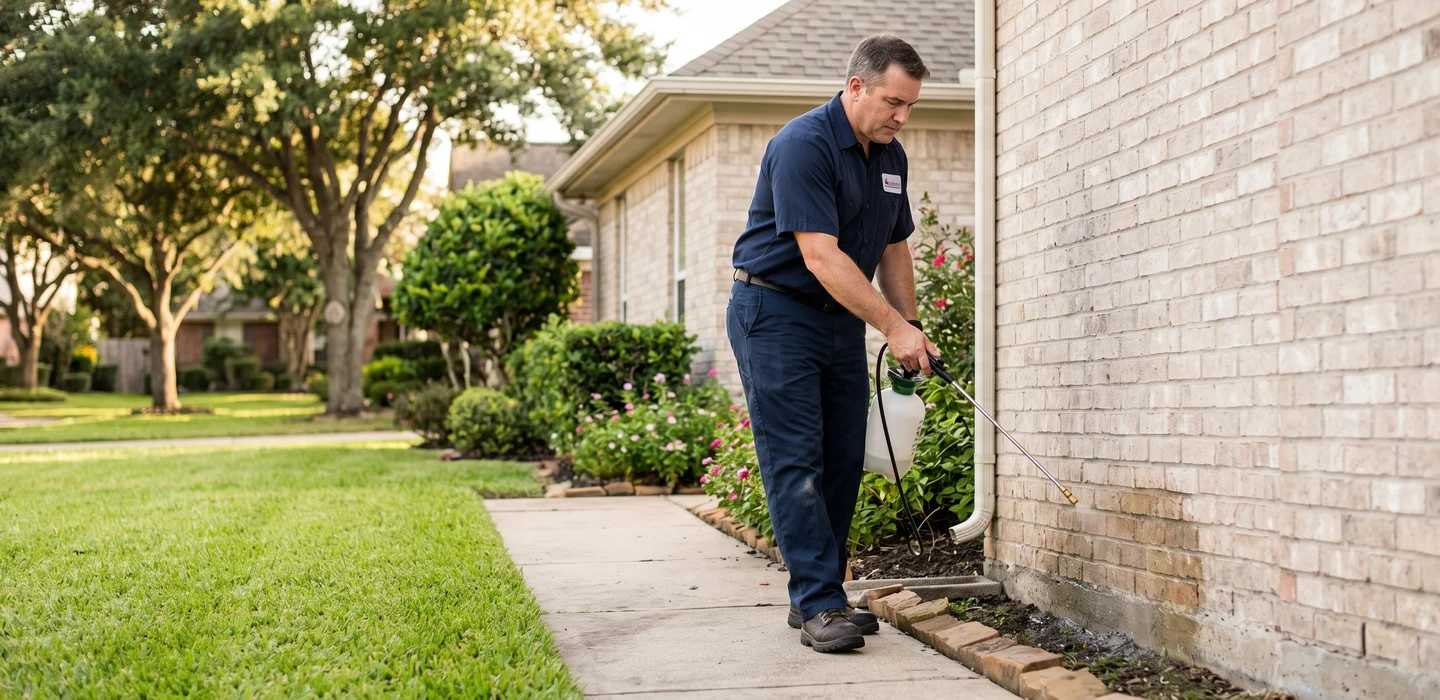
“I found frass pellets on the floor of the master closet and called three companies. Two gave me fumigation quotes immediately without inspecting. David found a single localized colony in the closet ceiling framing and treated it with spot injection. No tent, no three-day evacuation, and the problem was resolved.”
Houston Drywood Termite Treatment
Drywood Termite Treatment in Houston, TX
Drywood termites infest Houston's older homes through exposed wood surfaces — attic framing, window frames, door casings, and hardwood furniture. Unlike subterranean species, they need no soil contact and are not controlled by liquid soil barriers. Resolve inspects for drywood termite evidence and determines whether spot treatment or whole-structure fumigation is appropriate for your home.
- Drywood termites produce distinctive hexagonal frass pellets — the primary identification marker before treatment
- Spot treatment with termiticide injection for localized, accessible colonies
- Structural fumigation for multi-area infestations in older Houston homes near the Ship Channel and inner loop
- Species confirmation prevents the costly mistake of treating drywood activity with subterranean methods
What Resolve's Drywood Termite Treatment Covers in Houston
Accurate species identification, appropriate treatment method, and honest recommendation on whether fumigation is actually necessary.
- Drywood frass pellet identification confirms the species before any treatment is recommended — prevents misdiagnosis and wrong-treatment errors
- Spot treatment with termiticide injection for localized colonies in window frames, door casings, or single attic sections
- Whole-structure fumigation for infestations spread across multiple inaccessible areas of an older Houston home
- Honest assessment of whether fumigation is necessary — not every drywood infestation requires tenting
- Older Houston homes near the Ship Channel and inner loop — high-risk structure types given age of lumber and paint exposure
- Post-treatment recommendations on sealing exposed wood and maintaining paint to reduce future re-infestation risk
Houston Homeowners on Drywood Termite Treatment
Species confirmation first Spot treatment when appropriate Licensed fumigation
“Older home near the Museum District — drywood termites in three separate attic sections. David was honest that the distribution of colonies made spot treatment impractical and that fumigation was the right call. He handled all the logistics. The frass deposition stopped completely after treatment.”
“We had been seeing frass for two seasons and kept hoping it was sawdust from the carpenter upstairs. David identified drywood termites immediately from the pellet shape and found two colonies in the window frames. Spot treatment took care of both. He explained why soil treatments would have done nothing for drywood species.”
Drywood Termite Treatment Services in Houston
From frass identification through spot treatment or fumigation — matched to the actual infestation scope.
Drywood Termite Identification
Drywood termites are identified by their distinctive hexagonal frass pellets, exit holes in wood surfaces, and galleries in wood without soil contact. Frass pellets distinguish drywood from subterranean termites, which do not produce them. Accurate identification is the first step.
Spot Treatment with Termiticide Injection
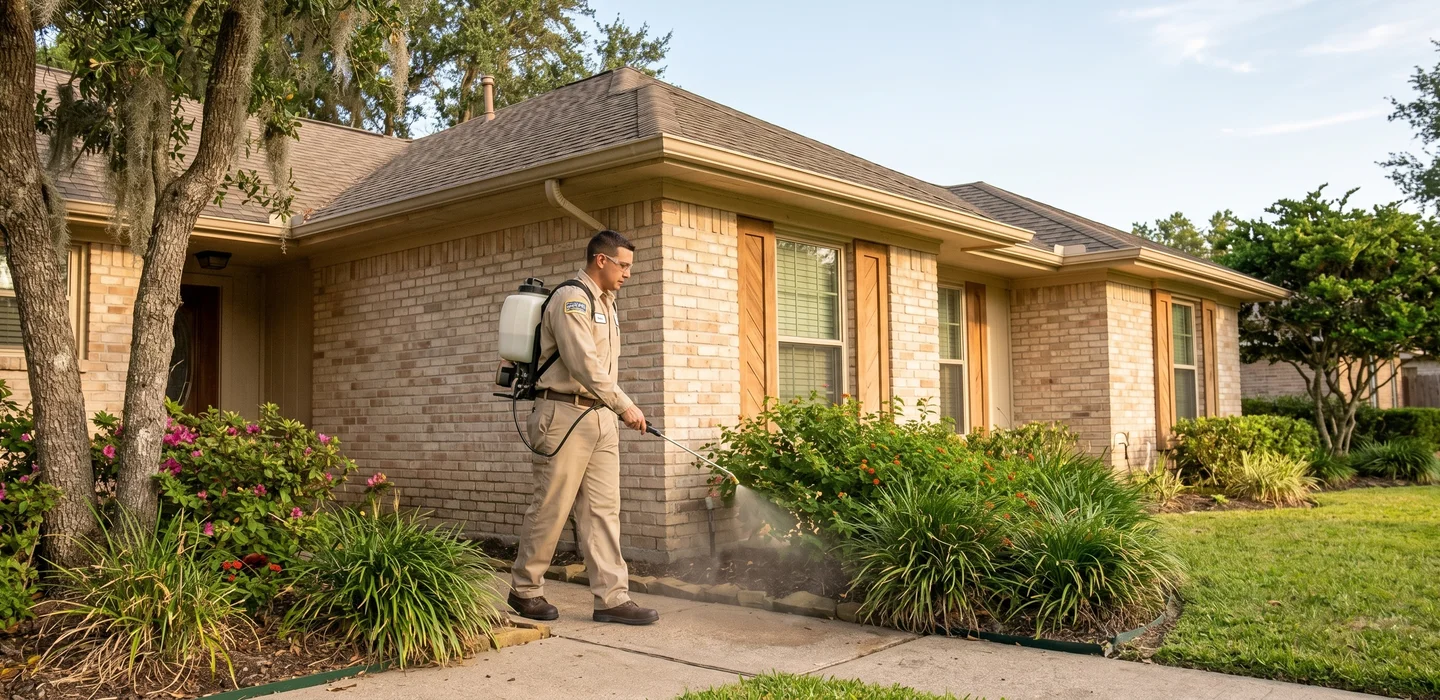
Localized drywood colonies in accessible wood — window frames, door casings, fascia boards, or a specific attic section — can often be treated with direct termiticide injection into the gallery system. This avoids fumigation when the infestation is contained.
Structural Fumigation
When drywood colonies are spread across multiple areas of an older Houston home — particularly in attic framing with plank sheathing — whole-structure fumigation with sulfuryl fluoride reaches every colony simultaneously. Resolve coordinates the full fumigation process.
Attic Framing Inspection
Houston homes built before 1970 often have old-growth lumber in the attic with plank sheathing — materials that are dense enough to support drywood termite galleries over many years. Attic inspection is a standard part of any drywood termite assessment.
Window and Door Frame Treatment
Window frames and door casings on the exterior of Houston homes are common drywood entry points — swarmers land on exposed wood and establish new colonies through existing cracks or unpainted surfaces. Spot injection and frame sealing address both the colony and the entry condition.
Re-Infestation Prevention Guidance
Drywood termites re-infest through swarming — swarmers land on exposed, unpainted, or degraded wood surfaces. Post-treatment recommendations include sealing wood exposure, maintaining paint on all exterior wood, and annual inspection to catch new activity before colonies establish.
How Resolve Treats Drywood Termites in Houston
Confirm the species, assess the scope, choose the right treatment method.
- 1
Species Confirmation
David inspects for drywood termite frass pellets, exit holes, and gallery damage in attic framing, window frames, door casings, and accessible wood members. Frass pellet morphology confirms drywood species and distinguishes from subterranean termite evidence.
- 2
Infestation Scope Assessment
The number and distribution of active colony sites determines the treatment approach. One or two localized colonies in accessible areas qualify for spot treatment. Multiple colonies across inaccessible attic framing or wall voids typically require structural fumigation for complete elimination.
- 3
Treatment Application
Spot treatment involves drilling and injecting termiticide directly into the gallery system at confirmed colony locations. Fumigation involves tent installation, sulfuryl fluoride application over 2-3 days, and post-aeration clearance confirmation before re-entry.
- 4
Post-Treatment Monitoring
For spot treatment, David follows up at 30 days to confirm frass deposition has ceased. For fumigation, a post-clearance inspection confirms all areas are negative. Recommendations are provided for sealing exposed wood to reduce future re-infestation risk.
Drywood vs Subterranean Termites in Houston — Treatment Differences
Understanding why the species determines the treatment is essential for Houston homeowners.
| Feature | Drywood Termite Treatment | Subterranean Termite Treatment |
|---|---|---|
| Lives and nests inside wood with no soil contact | ✓ | ✗ |
| Controlled by soil liquid barrier | ✗ | ✓ |
| Identified by hexagonal frass pellets | ✓ | ✗ |
| Identified by mud tubes on foundation | ✗ | ✓ |
| Spot treatment option for localized colonies | ✓ | ✗ |
| Sentricon bait effective | ✗ | ✓ |
| Fumigation required for multi-area infestations | ✓ | ✗ |
Case Study
Ship Channel-Area Home: Multiple Drywood Colonies Treated with Targeted Spot Injection, Fumigation Avoided
The Problem
A homeowner near Houston's Ship Channel area contacted Resolve after finding frass pellets in two bedrooms and the garage. The home was a 1955 ranch-style with original wood window frames throughout. A previous exterminator had proposed full structural fumigation as the only option without assessing whether the colonies were accessible for spot treatment.
Our Solution
David inspected each window frame individually, found active drywood colonies in four frames with frass deposition, and confirmed all four were accessible for direct injection treatment. The garage framing showed old, inactive drywood galleries with no current frass — evidence of past infestation, not active. He treated all four active window frames with termiticide injection and sealed the injection points.
The Outcome
Frass deposition ceased in all four treated locations within three weeks. A 30-day follow-up confirmed no new frass. The homeowner avoided the cost and disruption of a 3-day fumigation process. David recommended repainting all exterior window frames to close the bare wood exposure that had attracted the original swarmers.
Drywood Termite Treatment FAQs for Houston Homeowners
What do drywood termite frass pellets look like?
Drywood termite frass pellets are distinctive — roughly 1 millimeter in size, hexagonal in cross-section, and typically tan to reddish-brown in color matching the wood the colony is infesting. They accumulate in small piles beneath kick-out holes in the infested wood. This frass is the most reliable identification marker and distinguishes drywood from subterranean termite activity.
Are drywood termites common in Houston?
Yes, though less prevalent than subterranean species. Drywood termites are found most often in older Houston homes with original wood windows, fascia boards, and attic framing — particularly in the Heights, Montrose, Museum District, and neighborhoods near the Ship Channel with older housing stock. Swarmers are active in late summer and fall in Houston.
Can I treat drywood termites myself?
Spot treatment for drywood termites requires a drill, injection equipment, and licensed termiticides not available to the general public. DIY options — including orange oil and electrocution devices — have very limited effectiveness against established colonies in wood framing. Professional identification and targeted injection consistently outperforms DIY approaches.
How do drywood termites get into a house?
Drywood termite reproductive swarmers are winged and fly to new wood during swarming season — late summer through fall in Houston. They are attracted to exposed, unpainted, or weathered wood surfaces where they can chew an entry gallery and begin a new colony. Maintaining paint on all exterior wood members and sealing cracks in wood are the primary preventive measures.
Is fumigation always needed for drywood termites?
No. Spot treatment is appropriate when colonies are localized and the wood is accessible for injection. Fumigation is the more thorough choice when colonies are distributed across multiple inaccessible areas — particularly in attic framing of older Houston homes. The inspection scope determines which option is appropriate for each situation.
Do drywood termites cause as much damage as Formosan termites?
Drywood termites cause damage more slowly — their colonies are much smaller than Formosan colonies and grow more gradually. However, they can persist for years in attic framing without being detected if frass is deposited in inaccessible areas. Long-term drywood infestations in structural lumber can cause significant damage if not identified and treated.
Related Termite Services in Houston
Houston Pest and Termite Hub
All pest and termite services in Houston, TX.
Harris County Service Area
Termite and pest control across all of Harris County.
Termite Fumigation in Houston
Whole-structure fumigation for drywood infestations in Houston.
Termite Inspection in Houston
WDO inspections and drywood termite identification.
Termite Control in Houston
All termite control services for Houston homes.
Drywood Termite Treatment Page
Full overview of drywood termite treatment services.
Get Drywood Termite Treatment in Houston — Spot Treatment or Fumigation, Determined by Inspection
David identifies the species and scope before recommending any treatment. Not every drywood infestation requires fumigation — and not every termite problem is drywood. Honest assessment first.