“We had mud tubes forming along the rear foundation wall every spring for two years before calling David. He explained how the drainage easement behind our lot was feeding moisture to the soil right against the slab, and exactly why the colony kept rebuilding in that spot. His treatment addressed both the colony and the moisture pathway. No mud tubes since.”
Subterranean Termite Treatment — Deer Park, TX
Subterranean Termite Treatment in Deer Park, TX
Subterranean termites are the dominant termite threat in Deer Park. Harris County clay soil retains the deep subsurface moisture these colonies require year-round — there is no cold season that disrupts foraging activity. The Houston Ship Channel industrial corridor adds humidity that elevates soil moisture further. Resolve provides targeted subterranean termite treatment matched to Deer Park's specific soil and drainage conditions.
- Full-perimeter liquid termiticide barriers eliminate active colonies at the foundation
- Sentricon Always Active bait stations intercept new foraging from drainage corridors
- Post-Harvey soil disruption expertise — identifies reactivated colony pathways
Why Deer Park Homeowners Choose Resolve for Subterranean Termite Treatment
Local expertise in Harris County clay-soil termite biology and the drainage conditions specific to Deer Park lots.
- David personally applies every treatment — familiar with Deer Park's soil conditions and drainage patterns
- Clay-soil termiticide application calibrated for Harris County's moisture-retaining soil profile
- Post-Harvey expertise — identifies reactivated colony pathways from flood-disturbed soil
- Sentricon stations placed at drainage corridor margins where new colony pressure originates
- EPA-registered termiticides safe for children and pets in family-oriented Deer Park neighborhoods
- No contracts — treatment monitoring plans are optional and contract-free
Deer Park Homeowners Recommend Resolve for Subterranean Termite Treatment
Clay-Soil Expertise Sentricon Monitoring No Contracts
“Three years after Harvey we started seeing subterranean termite activity inside our walls — clearly something that had been building since the flood repairs. David found active foraging in two locations and treated the full perimeter plus installed Sentricon stations along the back lot line. Follow-up at 45 days was clean. Highly recommend.”
“I had an annual inspection with a national chain and they missed active mud tubes under my back porch stairs. David found them in 10 minutes. He did the liquid barrier treatment that same week and explained exactly what to look for in the weeks after. His thoroughness is the real difference between owner-operated and franchise service.”
Our Subterranean Termite Treatment Approach in Deer Park
Treatment strategies matched to Deer Park's clay soil, drainage corridors, and flood-plain lot conditions.
Soil Moisture and Drainage Assessment
Before applying any treatment, David assesses your lot's drainage patterns, moisture concentration zones, and any bayou or easement proximity that influences colony foraging direction. Treatment placement is adjusted for Deer Park's specific soil conditions.
Full-Perimeter Liquid Barrier
Termidor or equivalent termiticide trenched and rodded along the full foundation perimeter. The termiticide zone in Deer Park's dense clay soil is long-lasting and effectively eliminates active colonies and prevents new soil foraging from reaching the foundation.
Sentricon Station Installation
In-ground Sentricon Always Active bait stations placed at foundation intervals and along drainage corridor margins. Particularly valuable for Deer Park lots adjacent to easements, channels, or bayou margins where new colony pressure is ongoing between annual inspections.
Slab Interior Treatment
For active infestations that have penetrated inside the slab or pier-and-beam foundation, localized interior soil treatment is applied through existing access points to address foraging already established beneath the floor structure.
Post-Flood Colony Pathway Assessment
Harvey and subsequent flooding disturbed subterranean termite colonies and redirected foraging routes throughout Deer Park. David identifies these reactivated pathways and targets treatment at the colony relocation points rather than only the visible mud tube evidence.
Annual Monitoring and Re-Inspection
Year-round monitoring is the most effective long-term strategy for Deer Park's always-active termite environment. Annual Sentricon station checks and perimeter re-inspections maintain protection and catch new colony activity before it reaches the structure.
How Subterranean Termite Treatment Works in Deer Park
From soil assessment to confirmed colony elimination — a clear, accountable process.
- 1
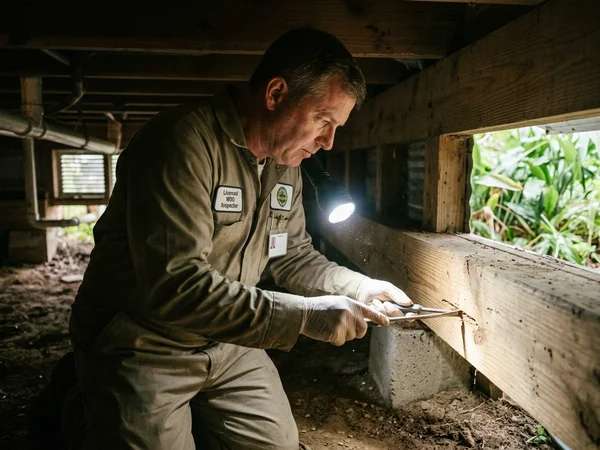
David inspects the foundation perimeter, identifies active mud tube locations, and assesses the lot's drainage and moisture patterns. For Deer Park homes near drainage corridors, he maps likely colony migration routes from adjacent moisture zones.
- 2
Full-perimeter liquid barrier application via trenching and rodding along the foundation. Sentricon stations are installed at strategic intervals. Treatment is typically completed in a single day for a standard Deer Park home.
- 3
David explains what to expect in the days following treatment — including temporary increases in termite activity as the colony is disrupted — and when to call if you observe specific indicators that warrant a follow-up before the scheduled re-inspection.
- 4
Follow-up inspection at 30 to 60 days confirms colony elimination. Annual monitoring options are available without contracts for Deer Park homeowners who want ongoing protection against the area's year-round subterranean termite pressure.
Resolve vs. National Subterranean Termite Programs in Deer Park
| Feature | Resolve Pest and Termite | National Termite Programs |
|---|---|---|
| Soil moisture and drainage assessment before treatment | ✓ | ✗ |
| Owner applies treatment and performs follow-up | ✓ | ✗ |
| Post-Harvey reactivated colony pathway expertise | ✓ | ✗ |
| No long-term service contracts | ✓ | ✗ |
| Sentricon stations placed along drainage corridor margins | ✓ | ✗ |
| 30 to 60 day follow-up inspection included | ✓ | ✗ |
| Liquid termiticide barrier available | ✓ | ✓ |
Case Study
Deer Park: Recurring Colony Pressure Traced to Drainage Easement Moisture
The Problem
A Deer Park homeowner had received two prior subterranean termite treatments from a national chain in five years, but mud tubes kept returning along the rear foundation wall each spring. The prior treatments had applied liquid barriers around the front and sides of the home but had not addressed the drainage easement at the rear property line — a persistent moisture source that was sustaining colony pressure originating outside the treated perimeter.
Our Solution
David identified the drainage easement moisture as the colony source during his initial inspection. He applied a full-perimeter liquid barrier with concentrated treatment along the rear foundation wall and a 3-foot extension into the soil toward the easement margin. Sentricon Always Active stations were installed along the full length of the rear property line, specifically targeting the easement corridor.
The Outcome
Mud tube activity did not return in the spring following treatment — the first time in three years. Sentricon station monitoring at the 6-month check showed interception activity at two rear-line stations, confirming that the easement corridor continues to generate colony pressure that the bait stations are successfully intercepting before it reaches the foundation. Annual monitoring is now the homeowner's permanent strategy for this lot.
Subterranean Termite Treatment FAQs for Deer Park, TX
Why do subterranean termites keep coming back in Deer Park?
Recurring subterranean termite activity usually means the moisture source sustaining the colony has not been addressed. In Deer Park, drainage easements, bayou-adjacent lots, and Ship Channel corridor humidity are persistent moisture sources outside the treated foundation perimeter. Sentricon stations along these moisture corridors intercept new foraging before it reaches your foundation.
What is the difference between subterranean and drywood termites?
Subterranean termites live in the soil and forage up through mud tubes to access wood in your home. They require soil moisture to survive and are the dominant species in Harris County's clay soil. Drywood termites live inside dry wood — typically attic framing or wood trim — and do not require soil contact. Both species are present in Deer Park.
How deep does subterranean termite treatment need to go in Deer Park's clay soil?
Harris County clay soil requires termiticide application at depths of 6 to 12 inches along the foundation perimeter to create an effective barrier. David calibrates treatment depth to your specific soil conditions and moisture levels — shallower applications in clay soil can leave gaps that allow continued foraging.
Is Termidor safe to use around children and pets in Deer Park homes?
Termidor is EPA-registered for use in residential settings. Once applied to the soil and dry, it does not pose a risk to household members. David explains the brief re-entry intervals after application and any specific precautions for your household before treatment begins.
What time of year is subterranean termite activity worst in Deer Park?
In Deer Park's climate, subterranean termites are active year-round. Activity peaks when soil temperatures rise in late winter through spring — Formosan swarmer season runs from April through June. However, foraging continues below the surface throughout fall and winter in Harris County's mild climate. Annual inspection is the only reliable way to monitor activity.
Will the treatment harm my landscaping or garden?
Termiticide application is targeted to the soil along the foundation perimeter and does not affect established lawn grass or landscaping beyond a narrow treatment zone. David will identify any garden beds or sensitive plant areas adjacent to the foundation and adjust application methods accordingly.
Related Termite Services in Deer Park
Stop Subterranean Termites in Deer Park Before They Reach Your Foundation
Harris County clay soil keeps subterranean termite colonies active every month of the year. If you have seen mud tubes, swarmer wings, or soft spots in flooring — or just want to confirm your home is protected — call David today. Owner-operated, honest, and effective.