“We had scratching in the attic every night for months. David identified it as roof rats accessing through a gap in the soffit where a large oak branch nearly touches the roofline. He sealed the entry points, set traps in the attic, and trimmed the overhanging branch as a recommendation. No activity for four months. The exclusion is the lasting fix.”
Rodent Control — Deer Park, TX
Rodent Control in Deer Park, TX
Deer Park homeowners deal with two distinct rodent problems that demand different solutions. Roof rats travel the mature oak and pecan canopy overhanging established Deer Park lots and access attics through roofline gaps. Norway rats and house mice migrate from Ship Channel drainage corridors and industrial areas into residential neighborhoods through sewer infrastructure and utility trenches. Resolve identifies which rodent you have and treats the actual entry pathway.
- Roof rat attic exclusion — sealing canopy-access entry points in rooflines and soffits
- Norway rat and mouse control for drainage-corridor migration pressure
- No rodenticide bait in living spaces — mechanical trapping and exclusion are the primary methods
Why Deer Park Homeowners Trust Resolve for Rodent Control
Species-accurate identification and exclusion strategies matched to Deer Park's specific canopy and drainage corridor rodent sources.
- David identifies roof rat versus Norway rat versus mouse before selecting treatment approach
- Roofline and canopy entry-point assessment — roof rats require attic exclusion, not just perimeter bait
- Drainage corridor migration assessment for ground-level rodents from Ship Channel adjacent infrastructure
- Mechanical trapping preferred over exterior rodenticide bait stations near Deer Park's family homes
- Entry-point sealing stops future access — treatment that addresses the cause, not just the symptom
- No contracts — single service or follow-up monitoring, your choice
Deer Park Homeowners Recommend Resolve for Rodent Control
Attic Exclusion Canopy Entry Assessment No Rodenticide in Living Spaces
“We had mice getting into the kitchen pantry from what turned out to be gaps around the gas line entry near the stove. David found it in minutes, sealed it, and set snap traps inside the cabinets. Within a week, the problem was gone. He was careful to avoid any bait station near our kitchen given we have young children. Appreciated that.”
“Norway rats from the drainage channel behind our block had been getting under our pier-and-beam foundation. David inspected the crawlspace, found the access points along the foundation skirt, and sealed them with hardware cloth. He also set traps in the crawlspace. Clear at 30 days and the channel pressure hasn't found a way back in.”
Our Rodent Control Services for Deer Park Homes
Species-specific solutions for Deer Park's two distinct rodent pressure types — canopy-accessing roof rats and drainage-corridor ground rodents.
Roof Rat Attic Exclusion
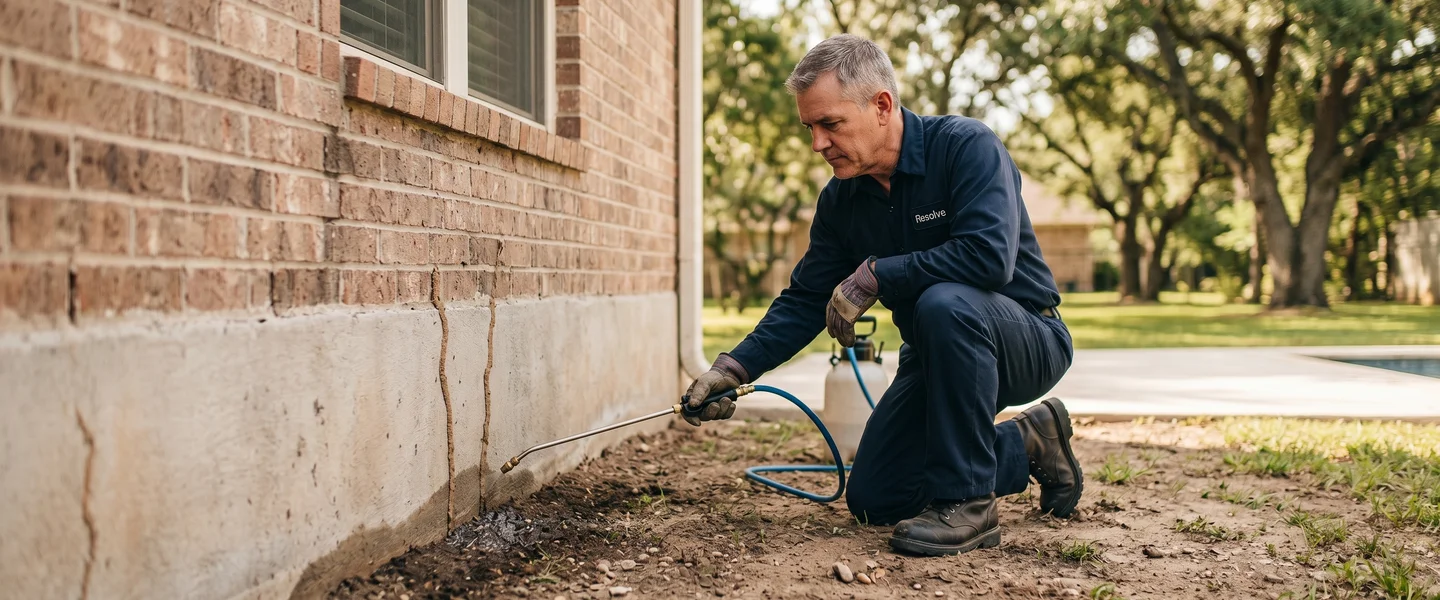
Roof rats access Deer Park attics through soffit gaps, fascia board damage, ridge vent openings, and roofline penetrations — often jumping from overhanging oak or pecan branches. David identifies all active entry points and seals them with exclusion-grade materials. Trapping removes the population already inside.
Tree Canopy Assessment
For Deer Park's established lots with large overhanging trees, canopy trimming recommendations are provided alongside exclusion work. Entry-point sealing without canopy management leaves the primary access route intact — a common reason rodent problems recur in this neighborhood.
Norway Rat and Mouse Exclusion
Ground-level rodents migrating from drainage corridors enter through foundation vents, utility penetrations, and pier-and-beam crawlspace gaps. David seals these entry points with hardware cloth, metal flashing, and expandable foam appropriate to each gap type.
Mechanical Trapping
Snap traps placed in attic, crawlspace, and interior harborage areas eliminate active rodent populations efficiently. Trapping is preferred over rodenticide bait in areas accessible to children and pets — the standard for Deer Park's family-oriented households.
Crawlspace and Foundation Assessment
For Deer Park's pier-and-beam homes, the crawlspace is a primary rodent harborage and entry route. David inspects the full crawlspace perimeter, identifies foundation skirt gaps, and assesses drainage-corridor access routes from adjacent easements or channels.
Follow-Up and Monitoring
A follow-up inspection at 30 days confirms trapping effectiveness and entry-point seal integrity. Monitoring options are available for Deer Park lots adjacent to drainage corridors where ongoing rodent pressure from the adjacent habitat is a recurring seasonal factor.
How Rodent Control Works in Deer Park
A species-first approach — identify the rodent, find the entry point, seal it, and remove the population inside.
- 1
David inspects the attic, crawlspace, and exterior perimeter. Droppings, gnaw marks, and entry-point evidence are used to confirm whether you have roof rats, Norway rats, or mice — each requiring a different exclusion strategy.
- 2
For roof rats, David evaluates the roofline, soffit, and canopy overhang. For ground rodents, he inspects foundation vents, utility penetrations, and crawlspace access. Every confirmed entry point is documented before sealing work begins.
- 3
Entry points are sealed with appropriate materials — hardware cloth for crawlspace vents, metal flashing for soffit gaps, and expandable foam for utility penetrations. Mechanical traps are placed inside the home, attic, or crawlspace to eliminate the existing population.
- 4
A 30-day follow-up inspection checks trap activity, verifies seal integrity, and confirms no new entry has occurred. For drainage-corridor lots where seasonal migration pressure is ongoing, monitoring options are discussed at the follow-up.
Resolve vs. General Pest Services for Rodent Control in Deer Park
| Feature | Resolve Pest and Termite | General Pest Services |
|---|---|---|
| Species identification before treatment selection | ✓ | ✗ |
| Roofline and canopy entry-point assessment for roof rats | ✓ | ✗ |
| Drainage corridor migration assessment for ground rodents | ✓ | ✗ |
| Mechanical trapping preferred over rodenticide near families | ✓ | ✗ |
| Entry-point sealing included — not just bait placement | ✓ | ✗ |
| Follow-up inspection at 30 days | ✓ | ✗ |
| No long-term service contracts required | ✓ | ✗ |
Case Study
Deer Park: Roof Rat Attic Infestation via Canopy Access Point
The Problem
A Deer Park homeowner on a heavily treed lot contacted Resolve after hearing persistent scratching in the attic ceiling above the master bedroom. The noise was most active at night between 9 PM and 2 AM — consistent with roof rat activity patterns. A neighbor had similar activity the previous year, suggesting an established canopy population moving between lots along the mature oak tree line.
Our Solution
David's inspection found three active entry points: a soffit gap where a large oak branch had rubbed through the fascia board, a ridge vent with degraded screen mesh, and an open gap around the HVAC refrigerant line penetration. All three were sealed with exclusion-grade hardware cloth and metal flashing. Eight snap traps were placed in the attic along active run paths identified by droppings.
The Outcome
All eight traps had activity within the first week. At the 30-day follow-up, no new entry was observed and no trap activity in the final two weeks. The homeowner was advised to have the oak branch trimmed back from the roofline — a key preventive step that several prior rodent services had not recommended. No roof rat activity was observed in the attic through the next spring canopy season.
Rodent Control FAQs for Deer Park, TX
How do roof rats get into Deer Park attics?
Roof rats are excellent climbers and routinely use overhanging tree branches to access rooflines. Deer Park's mature oak and pecan canopy provides direct bridges to soffits, fascia boards, and ridge vents — especially as branches grow into contact with the roofline over decades. Entry gaps as small as a half dollar are sufficient for adult roof rats.
How do I know if I have roof rats versus Norway rats?
Noise in the attic ceiling at night — especially between 9 PM and 2 AM — is a strong indicator of roof rats. Norway rats are ground-dwelling and typically found in crawlspaces, garages, and along foundation perimeters. Droppings size and shape also differ: roof rat droppings are small and spindle-shaped; Norway rat droppings are larger and blunt-ended. David confirms the species on inspection.
Why does Deer Park have such high roof rat pressure?
Deer Park's established residential neighborhoods have large, mature tree canopies that create interconnected travel routes above the ground level — ideal for roof rat population movement between properties. Adjacent drainage corridors and the industrial proximity also support elevated total rodent populations in the area compared to newer suburban communities.
Is rodenticide bait safe to use in homes with children and pets?
Exterior bait stations placed in locked tamper-resistant housings are generally safe, but David prefers mechanical trapping in living areas and attic spaces where children or pets could encounter bait. For drainage-corridor lots where exterior station placement is warranted, he selects station types and placements appropriate for households with children and pets.
Can rats cause structural damage in Deer Park homes?
Yes. Roof rats gnaw on electrical wiring, HVAC ducts, and wood structural members in attics. Norway rats burrow and gnaw through insulation and foundation materials. Unaddressed infestations cause fire risk from chewed wiring and significant insulation replacement costs. Early exclusion and trapping prevent damage that accumulates quickly.
How long does rodent exclusion take?
Entry-point sealing for a standard Deer Park home typically takes two to four hours. Attic trapping is left in place for two to four weeks with a follow-up trap check scheduled at the midpoint. The full resolution process from first call to confirmed clearance typically runs four to six weeks.
Stop Rodents From Damaging Your Deer Park Home
Roof rats in the attic and Norway rats from drainage corridors are both common in Deer Park — and both require different treatment strategies. David identifies the species, finds every entry point, and seals them properly. Honest service, no contracts, satisfaction guaranteed.