Bed Bug Inspection in Houston, TX
A thorough bed bug inspection is what determines whether you have bed bugs, where they are concentrated, how far the infestation has spread, and which treatment method will actually eliminate the population. Skipping this step — or relying on symptoms alone — produces undertreated infestations that require repeat visits.
- Mattress seams, box spring edges, headboard, bed frame, and adjacent furniture all inspected
- Infestation scope confirmed — single room vs multi-room vs spread to adjacent furniture
- Treatment method selected after inspection, not before — heat vs chemical is an inspection-driven decision
- Same-day inspections available across Greater Houston
Why the Inspection Comes Before Treatment
Bed bug treatment is not a one-size approach. Heat treatment is highly effective for established, multi-room infestations in a single visit — but it requires preparation and is a higher investment than targeted chemical treatment. Chemical treatment with residual and IGR is appropriate for confirmed limited infestations where the boundaries are clear. Applying the expensive method to a minor infestation wastes money; applying the cheaper method to a large infestation produces failure and multiple retreatments.
The inspection is what determines which approach is correct. David maps every area of confirmed activity — mattress seams, box spring edges, headboard cracks, bed frame joints, nightstands, baseboards, and adjacent upholstered furniture. The distribution and density of evidence (live bugs, shed skins, fecal spots, egg casings) determine the infestation severity and spread.
Resolve does not recommend a treatment method over the phone based on symptoms. Symptoms can mislead — bites alone are not diagnostic, and most people underestimate the spread at first discovery. The inspection is the diagnostic step that produces an accurate picture of what is actually there.
What a Professional Bed Bug Inspection Covers
A systematic search of every area where bed bugs harbor — not just the mattress surface.
- 1
Primary Sleep Zone Inspection
Mattress seams and tufts, box spring edges and staple lines, headboard cracks and joints, and bed frame recesses are inspected with a flashlight. These are the highest-probability harborage areas for established infestations.
- 2
Adjacent Furniture and Fixtures
Nightstands, dressers, upholstered chairs, and baseboards adjacent to the sleep area inspected. Established infestations spread beyond the mattress — adjacent furniture is checked to determine how far activity has extended.
- 3
Secondary Room Assessment
If evidence indicates potential spread — or if the resident reports bites in multiple locations — adjacent bedrooms and living areas inspected. Multi-room scope requires heat treatment; single-room scope may be chemical-appropriate.
- 4
Scope Determination and Treatment Recommendation
David communicates the infestation scope, severity level, and treatment recommendation based on what was actually found. Heat vs chemical selection is made at this point with a clear explanation of the reasoning.
Signs a Bed Bug Inspection Will Confirm
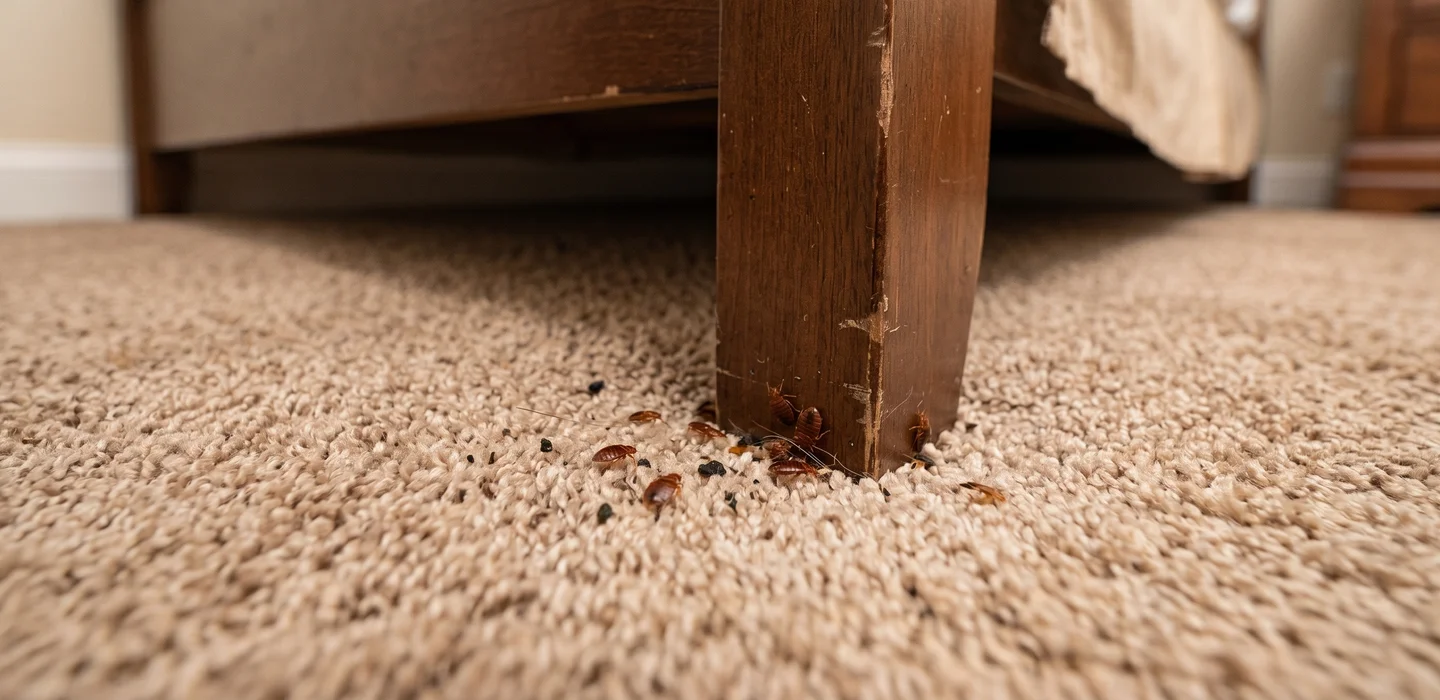
Bites alone are not a reliable indicator — many people do not react to bed bug bites at all, and bite patterns overlap with other insects. The physical evidence an inspection looks for includes small dark or rust-colored fecal spots at seam edges and crevice entry points, cream-colored shed exoskeletons (cast skins) near harborage areas, viable cream-colored eggs or egg casings in fabric folds and wood joints, and live insects at various life stages ranging from first-instar nymphs (nearly translucent, about 1.5mm) to adults (reddish-brown, 5-7mm after a blood meal).
The density and distribution of evidence maps the infestation's age and severity. Light fecal spotting with no live bugs may indicate an early or cleared infestation. Heavy fecal aggregation at multiple harborage points with nymphs of multiple sizes indicates an established, actively reproducing colony — a situation where heat treatment is significantly more reliable than chemical.
A sweet, musty odor in the room is sometimes noted in severe infestations. This is produced by bed bug scent glands and indicates a very high-density population concentrated in a small area — a sign that inspection findings will show significant activity and that treatment selection should lean toward heat.
What DIY Inspection Misses
Most people inspecting their own mattress look at the top surface and visible seam edges — areas that represent a fraction of the total harborage available. The box spring interior staple lines, the recesses behind the headboard where it meets the wall, the undersides of nightstand drawers, the fabric tucks of upholstered headboards, and the gap between the baseboard and carpet are all areas that require a methodical search with a light source and often a thin implement to open fabric folds.
Misidentification is also common — carpet beetle larvae and their shed skins are frequently mistaken for bed bug evidence. A professional inspection distinguishes between species confidently, which matters because treating for bed bugs when the pest is actually a carpet beetle wastes money and misses the actual problem.
Underestimating spread is the most consequential DIY inspection failure. Residents typically report the primary sleep area and stop — but established infestations regularly spread to a second bedroom, a couch where someone reads at night, or a guest room that was recently occupied. A missed secondary infestation area is why chemical treatment sometimes fails for what appeared to be a single-room problem.
Professional Inspection vs DIY Self-Check
| Feature | Professional Bed Bug Inspection | DIY Self-Check |
|---|---|---|
| All harborage areas systematically inspected | ✓ | Partial — surface and visible seams only |
| Accurate species identification | ✓ | Frequently misidentified |
| Secondary room spread assessment | ✓ | ✗ |
| Severity level and population stage mapping | ✓ | ✗ |
| Treatment method recommendation based on actual findings | ✓ | ✗ |
| Written scope documentation | ✓ | ✗ |
Bed Bug Inspection FAQs
How long does a bed bug inspection take?
Do I need to prepare for a bed bug inspection?
What if the inspection does not find bed bugs?
Can I see bed bugs with my eyes?
How soon can I get a bed bug inspection?
What Resolve's Bed Bug Inspection Includes
A systematic, documentation-backed scope assessment before any treatment recommendation.
Full Sleep Zone Inspection
Mattress, box spring, headboard, and bed frame inspected comprehensively — all seam edges, recesses, staple lines, and joints. The areas most likely to harbor early and established infestations.
Adjacent Furniture Assessment
Nightstands, dressers, upholstered chairs, and baseboard areas adjacent to the sleep zone inspected for evidence of spread beyond the primary harborage.
Secondary Room Evaluation
Additional rooms inspected when evidence or reported activity suggests spread. Multi-room infestation scope changes the treatment recommendation from chemical to heat — missed rooms are why chemical treatment sometimes fails.
Evidence Documentation
Harborage locations, evidence type (live bugs, shed skins, fecal spotting, eggs), and density level documented. Written findings provided with the treatment recommendation.
Treatment Method Recommendation
Heat vs chemical treatment recommendation made after the inspection based on actual scope and severity. Resolve does not default to the more expensive option — the recommendation follows the findings.
Hotels and Multi-Unit Properties
Discreet bed bug inspections for hotel rooms, apartment units, and multi-unit residential properties. Inspection documentation suitable for property management compliance records.
Why an Inspection-First Approach Produces Better Results
The right treatment method comes from what is found — not from assumptions or defaults.
- Accurate scope prevents undertreated infestations — missed rooms or furniture are the primary cause of chemical treatment failure
- Species confirmation rules out misidentification — carpet beetle larvae are frequently mistaken for bed bug evidence
- Treatment method selection based on actual findings prevents wasting money on inappropriate approaches
- Written documentation provides evidence of professional service — relevant for landlords, property managers, and commercial accounts
- Honest assessment — David reports what was found, including when evidence is ambiguous or inconclusive
- Same-day inspections available — early confirmation reduces the window for infestation spread
Bed Bug Control Services
Bed Bug Control
Inspection, heat, and chemical treatment for Houston bed bugs.
Bed Bug Treatment
Treatment methods for confirmed bed bug infestations.
Bed Bug Heat Treatment
Whole-room heat that kills all life stages in one visit.
Pest Control
Full pest control services for Houston homes and businesses.
Same-Day Pest Control
Fast response for urgent pest situations across Greater Houston.
Schedule a Bed Bug Inspection in Houston
David confirms the scope before recommending treatment. Same-day inspections available across Greater Houston — the sooner the inspection, the sooner the infestation stops spreading.